Archive for the ‘Poetry’ Category

A little poem about work, and getting things done

January 3, 2019

I moved last year and still have boxes of books and papers around my office. Yesterday as I was sorting through the junk I found a sheet of folded paper with Emily Dickinson’s cosmic poem about The Brain typed on it. On the other side was the playful little poem I had typed, For—Emily D— From—Kenny C—. On that same piece of paper was a short poem I had scribbled about the nature of work, and getting stuff done.

WORK

When you don’t have to work
You get the most work done.
Doing while non-doing
Transforms work into fun.

Don’t remember when I wrote it, probably last year, as I did the one for the Divine Miss D. I think I may have been working on a particular blog post. If it’s something I’m passionate about, I just lose track of time and enjoy the process. If it’s a job I have to do, then it becomes work, and can drag on. If I’m stuck, I usually start with following my passion first, and write something to express a creative urge. It’s my way of dealing with procrastination, and usually frees me up to then get down to the work at hand. After it was done, I reflected on the distinction, and wrote that little poem. I had scrawled underneath it: My little ditties for the day.

I remember something Maharishi once told us about work: “See the job; do the job; stay out of the misery.” That kept me going when I was doing blue-collar work for Vancouver Parks and Recreation. I also wrote a lot of poetry while working as a park attendant for Queen Elizabeth Park, and during visits to other Vancouver Parks, and while living in Fairfield, Iowa.

Poem: For—Emily D— From—Kenny C—

January 2, 2019

Emily Dickinson’s amazing poem of the Brain being wider than the Sky inspired me to write a playful little poem in her style. I had posted it as a Comment, and now decided to reproduce it here:

For—Emily D—
From—Kenny C—

I am Part of what I See—
An Unlimited Reality
If the Whole is contained in Each Part—
Then I End up—where I Start

New Haiku: Late Autumn in Santa Barbara

November 21, 2018

I’m back visiting my son for Thanksgiving in Santa Barbara. The first time I was there, a little over 2 ½ years ago, I wrote Threshold Haiku upon entering his house. Here’s a new haiku, which starts where the previous one ends, inspired by those pillars of jasmine plants.

Late Autumn in Santa Barbara

Pillars of jasmine
Stand dormant for the winter
Waiting to blossom

Ken Chawkin
Santa Barbara
Nov 20, 2018

The temporary paradox of death in life: writing a tanka for our family pet on his passing

October 27, 2018

The first Wednesday evening of this month, (October 3, 2018) our family’s Great Dane passed away peacefully resting under a cedar tree. His body had been breaking down; it was his time. Dakar had lived a full life, longer than expected for his breed. Even though he was no longer physically with us, I still felt his presence into the next day. It led me to contemplate the paradoxical nature of death and wrote this tanka for him that next morning as a way to try and understand this temporary contradiction, and express what I was feeling at the time.

Maybe some of you have had a similar experience after losing a loved one—a pet, a close friend, or a family member. I read this out this morning at a Death Café after hearing other people describe their experiences of grief, and unexpected surprises when a loved one passed. It was healing for all of us to share.

The Temporary Paradox of Death in Life
A tanka for Dakar on his passing

Silence, Peacefulness
A Fullness of Emptiness
Feeling you still here

An Absence of your Presence
A Presence of your Absence

© Ken Chawkin
October 27, 2018
Fairfield, Iowa

Thomas Merton’s golden poem, Song for Nobody

October 27, 2018

Another poem from Soul Food: Nourishing Poems for Starved Minds is Song for Nobody by Thomas Merton. This golden poem is Beautiful, Enigmatic, and Profound. Below are some reactions to it as I try to fathom the poet’s spiritual perspective. If you have any comments please feel free to post them below. I’d be curious to hear your take on it.

Black-Eyed-Susan Flower

Song for Nobody
by Thomas Merton

A yellow flower
(Light and spirit)
Sings by itself
For nobody.

A golden spirit
(Light and emptiness)
Sings without a word
By itself.

Let no one touch this gentle sun
In whose dark eye
Someone is awake.

(No light, no gold, no name, no color
And no thought:
O, wide awake!)

A golden heaven
Sings by itself
A song to nobody.

(more…)

Two profound poems by Stephen Levine: in the realm of the passing away & millennium blessing

October 16, 2018

I just discovered a fine poet, Stephen Levine, on this wonderful blogspot, THE BEAUTY WE LOVE. He was an American poet, author and teacher best known for his work on death and dying. He drew upon the teachings of a variety of wisdom traditions. Stephen and his wife Ondrea were also grief counselors. His poetry offers much wisdom on this subject. Here are two beautiful poems that deal with the ephemeral nature of existence; its deathless, limitless source; and a grace that draws us to it, our ultimate destination — in the realm of the passing away and millennium blessing — both taken from his book, Breaking the Drought: Visions of Grace.

In the realm of the passing away

This is the realm of the passing away. All that
exists does not for long.
…….Whatever comes into this world never stops sliding
toward the edge of eternity.
…….Form arises from formlessness and passes back,
arising and dissolving in a few dance steps between
creation and destruction.
…….We are born passing away.
…….Seedlings and deadfall all face forward.
…….Earthworms eat what remains.
…….We sing not for that which dies but for that which
never does.

* * *

Millennium blessing

There is a grace approaching
that we shun as much as death,
it is the completion of our birth.

It does not come in time,
…….but in timelessness
when the mind sinks into the heart
and we remember.

It is insistent grace that draws us
to the edge and beckons us surrender
safe territory and enter our enormity.

We know we must pass
…….beyond knowing
and fear the shedding.

But we are pulled upward
…….none-the-less
through forgotten ghosts
…….and unexpected angels,
luminous.

And there is nothing left to say
but we are That.

And that is what we sing about.

* * *

Stephen Levine (July 17, 1937 – January 17, 2016)

* * *

Related posts worth seeing: Rainer Maria Rilke’s poem, Buddha in Glory, reminds us of our eternal nature within || John Glenday’s poem, Concerning the Atoms of the Soul, illuminates and nourishes the mind || The temporary paradox of death in life: writing a tanka for our family pet on his passing || A white owl hunting in and out of the snow helps Mary Oliver see death as spiritual transformation || When Death Comes, a poem by Mary Oliver included in this memorial post for her. || Two thoughtful poems by Rhoda Orme-Johnson: When We Are Insubstantial & When You Are Young || Colin Hay’s song—I Just Don’t Think I’ll Ever Get Over You—is so relevant during these tough times || Undifferentiated, a poem I wrote in India processing my final moments with Sali when she had passed around 7 weeks earlier in Fairfield, Iowa. It was a realization that came to me 5 days after spreading her ashes from a boat on the Narmada River during a most auspicious day.

Added Nov 2, 2022: What the Living Do—Marie Howe’s ‘letter’ to her brother—an elegy to loss and how she lives with it.

These “death poems” by Charles Bukowski during the last years of his life are some of the best he ever wrote: a song with no end and The Laughing Heart.

— Written and compiled (citing sources) by Ken Chawkin for The Uncarved Blog.

Wendell Berry’s stepping over stones in a stream shows us how he writes a poem and takes a stand

September 5, 2018

“What I stand for is what I stand on.” — Wendell Berry

I love the playful music in this brilliant little poem by Wendell Berry from Leavings: Poems. As if imitating the sounds and poetry of nature, Berry’s stepping over stones in a flowing stream demonstrates his own creative flow, the way he uses words to show us how he writes a poem, and takes a stand for nature and his place in it.

The Book of Camp Branch

How much delight I’ve known
in navigating down the flow
by stepping stones, by sounding
stones, by words that are
stepping and sounding stones.

Going down stone by stone,
the song of the water changes,
changing the way I walk
which changes my thought
as I go. Stone to stone
the stream flows. Stone to stone
the walker goes. The words
stand stone still until
the flow moves them, changing
the sound – a new word –
a new place to step or stand.

Here’s another of his poems I posted: Wendell Berry’s “No going back” is about the generosity of the evolving self through time.

For more on this environmental legend and writer, see Wendell Berry: Poet and Prophet. Produced by Bill Moyers, it aired on PBS 10/03/13.

Just added another poem: The Peace of Wild Things by Wendell Berry, with a link to On Being of him reading this poem.

Added September 1, 2026: Wendell Berry is now one of The Loved Ones. Added September 2, 2026: Advice from Wendell Berry on How to Be a Poet. 

— Written and compiled (citing sources) by Ken Chawkin for The Uncarved Blog.

Denise Levertov’s The Avowel reminds me of the effortlessness of transcending in @TMmeditation

September 5, 2018

The Avowal
By Denise Levertov

As swimmers dare
to lie face to the sky
and water bears them,
as hawks rest upon air
and air sustains them,
so would I learn to attain
freefall, and float
into Creator Spirit’s deep embrace,
knowing no effort earns
that all-surrounding grace.

These poems also reference such a transforming experience:

Denise Levertov’s poem “Of Being” describes that mysterious moment of expansive inner stillness, joy and reverence

Denise Levertov’s Primary Wonder is being present to the quiet mystery that sustains us

Poems~Pears for Breakfast Haiku

August 30, 2018

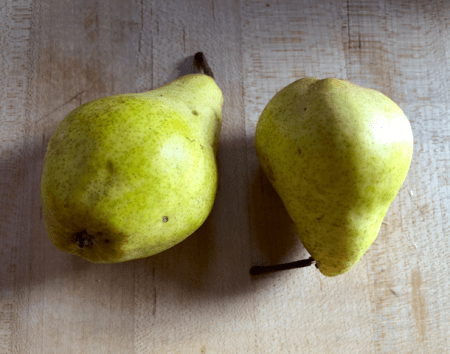
Today I saw Raffi tweeted a photo of two luscious pears. It reminded me of a haiku I had written and submitted eleven years ago to a Fairfield poetry competition. I decided to tweet the poem to him, which he liked. My Breakfast Haiku had won first place and I was invited to read it at Revelations Café. Since the photo and poem go so well together I decided to share them both with you in this blog post. Enjoy!

2 Pears 4 Breakfast Haiku

Photo of Salt Spring Island pears by Raffi Cavoukian used with permission

BREAKFAST HAIKU

Two poems, now ripe,
Waiting to be devoured,
Like pears on my plate.

Ken Chawkin
September 1, 2007
Fairfield, Iowa, USA

Freddy Fonseca had organized that Fairfield poetry competition, which culminated with the winning poets reading their poems at Revs Café. He also published my Five Haiku in This Enduring Gift – A Flowering of Fairfield Poetry, 2010. They were selected from 13 Ways to Write Haiku: A Poet’s Dozen published in The Dryland Fish, An Anthology of Contemporary Iowa Poets, 2003, edited by Matthew MacLeod. Freddy also included the tanka, Cold Wet Night, and Poetry—The Art of the Voice, for This Enduring Gift. See other haiku and tanka posted on The Uncarved Blog.

The spring rains renew life and the promise of love in this film inspired by the poetry of Du Fu

August 17, 2018

The good rain knows its season,
When spring arrives, it brings life.

I appreciate believable romantic movies. For some reason this one deeply moved me. I’ve watched A Good Rain Knows (when to come) (2009) several times. Also titled, Season of Good Rain, the film’s theme was inspired by a poem from Du Fu (Tu Fu). Love, like the right season, can come around again and potentially renew one’s life.

HUR Jin-ho directs this Korean-Chinese co-production. The love story stars South Korean actor Jung Woo-sung (Dong-ha) and Chinese actress Gao Yuanyuan (Mei).

Season of Good Rain (A Good Rain Knows)

Synopsis: Timely like the spring rain, so has he come back into my life… Dong-ha is a thirty-something Korean man on a business trip to Chengdu, China where his company is carrying out construction projects to rebuild the city after the earthquake of 2008. There, totally by chance, he meets an old friend from his school days in the U.S.. Mei (May) is originally from Chengdu, the capital city of Sichuan Province. She returned home after graduation and now works as a tour guide. Dong-ha and Mei were perhaps more than friends and had feelings for each other back then, but they parted ways before they had a chance to define or declare them. Now that their paths have crossed again, they find the old feelings remained, and new ones are forming that may resemble love.

This Du Fu poem inspired the film: Welcome Rain on a Spring Night.

The good rain knows its season,
When spring arrives, it brings life.
It follows the wind secretly into the night,
And moistens all things softly, without sound.
On the country road, the clouds are all black,
On a riverboat, a single fire bright.
At dawn one sees this place now red and wet,
The flowers are heavy in the brocade city.

The brocade city is Chengdu, in south-west China, where the story takes place. The park where Mei works contains a statue of Du Fu and a replica of the hut that he lived in, along with the kind of flowering trees he had planted. Dong-ha was also a poet, but got caught up in his work instead. He is later seen reading a poem by Du Fu titled, A Spring View.

Though a country be sundered, hills and rivers endure;
And spring comes green again to trees and grasses
Where petals have been shed like tears
And lonely birds have sung their grief.
…After the war-fires of three months,
One message from home is worth a ton of gold.
…I stroke my white hair. It has grown too thin
To hold the hairpins any more.

The subject matter about the destruction of war from the past resonates with the physical and emotional losses in the city after a recent earthquake. Mei’s life was also affected, as we find out later in the film.

This romantic film carries feelings of loss and longing, uncertainty and hopeful renewal brought about symbolically by the spring rains arriving in time. The theme song, with scenes from the film in the trailer, emotionally conveys those feelings: A Good Rain Knows When to Come – Falling Down / Song by Sungbin Cho / Sondtrack by Jaejin Lee. The Falling Down Instrumental is also beautiful to listen to. The 18-song Original Motion Picture Soundtrack is available on Spotify (40:49). It was also later updated on YouTube.

The rain and silence in the song, like the ones described in the poems, seem to carry a mystical quality about them, similar to the mysterious ways of love. The English translation leaves the listener wondering if there will be a more committed reunion. Here it is sung in English: Falling down – (A good rain knows when to come). Here is a video with excerpts from the film: Season of Good Rain (A Good Rain Knows) OST, Falling Down, Jung Woo-sung Yuanyuan Gao, 4K Upscaling.

Maybe sometime
It could be here again.
Trying to find out.
We don’t know yet.

Maybe it’s something
To make us come around.
The rain will be something
To let me calm down.

There is silence
Flowing around me
In the air
When you approach.

Maybe it’s something
To make you turn around
The raining is something
Just holding me now.

(Musical bridge)

I know that you wonder
Where we stay around.
Maybe I found you
Always here in my mind.

It’s falling around me
I’m feeling like lost in time.
I’m waiting behind you.
Just don’t let me down.

You’re running away now.
You’re sinking in flowing time.
The raining reminds me of your smile.
Don’t bring me down.

This love song, sensitively and beautifully performed, captures the uncertainty of their situation after meeting again years later by chance. The attraction between them is still there, but it never had a chance to develop into a serious relationship. Will it now? The song plays at the end of the film and as the credits roll.

Two different endings?

For some reason the ending seems slightly different in this version, which has better picture and sound quality on YouTube. At the last moment of the film, we see Dong-ha pacing back and forth, hoping that Mei will come out of the park entrance, but she doesn’t appear. It leaves the viewer hoping and waiting, with him. Did he return after much soul-searching ready to commit to her? Was she ready to commit to him? Will he wait in vain?

I found a similar version, with English subtitles, and at that last scene, as he turns away, we see someone pushing a yellow bicycle with a basket out of the park entrance, but can’t quite make out if it’s Mei as it cuts to black and the credits roll. Maybe they did that to keep us in suspense. You get the feeling they will see each other, but we’re left to wonder what will happen next.

The reason why I think it’s Mei is because he had mailed a bicycle to her as a gift. She had sold the first one he had given her when they were students, since she didn’t ride a bike. When they meet again, and it comes up in conversation, he gets upset. Now, at the end of the film, her co-workers assemble the new yellow bike with basket. We see her awkwardly riding it at first, then with more confidence, and finally smiling with the wind blowing in her hair. Fade to black, then wait for who I think might be her.

I had posted a link to that moment, but the video was taken down. I found another one with that footage at the end of the film where Dong-ha is pacing back and forth hoping to see Mei who doesn’t know he’s there. He turns away from looking at the entrance, where the other version ends. In this version we see a woman walk out of the park entrance pushing a yellow bike with a basket. At that moment we see him “turn around” again looking towards the entrance. We get a glimpse of their potential reunion, just as the picture fades to black. It’s only 4 seconds, but it gives viewers hope. The movement matches the words of the song, as their hearts have “come around” to each other. Click this link to see it from 1:37:16 to 1:37:20, before it fades to black and the credits roll.

For some reason it was left out in the other version. Maybe they decided to make it purposefully ambiguous to keep viewers guessing? Or it might have something to do with which version was shown in which country — Korea, China, Taiwan, Japan, or elsewhere. If you watch the film with both endings, post a comment; I’d like to know your take on it. Assuming those links will still be active. I keep checking and replacing the old non-functional links with newer ones. Here are two of the same video (1:41:16) posted as A Season of Good Rain… and A Good Rain Knows 2009 XviD AC3 MZone.

Updated: Possible explanation

I later discovered an American film critic living in South Korea who had reviewed the film and emailed to ask him about the film’s ending. When I pointed out the different endings he was surprised, and said “that was a very good eye catch on your part.”

He didn’t remember which version he had seen and wouldn’t have noticed or guessed that it was Mei with her bicycle. But he did give this surprising answer. “If I were to hazard a guess I would say the version without the woman and the bicycle is the original version and the one with the woman and the bicycle was added in for international release (or at least, the release in whichever market CHC operates in) for the sake of implying a happier ending. This is a fairly common practice with exported South Korean films from this time period.”

I noticed that some videos get blocked by YouTube for copyright purposes, so by the time you read this review, you may not be able to access the other version with the different ending. But I update them whenever possible, replacing older links with newer ones.

Later added: The symbolic role of the two books in this film

In the opening scene, Dong-ha is seen reading ‘The Alchemist’ by Paulo Coelho, which is “about the essential wisdom of listening to our hearts, learning to read the omens strewn along life’s path, and, above all, following our dreams.” I found that 1993 English version he was reading on Amazon.

We see him putting a postcard in the book, which has a photo of the bamboo gardens (1:02) dedicated to the Chinese poet Du Fu, a place he will soon visit, where fate will intervene.

When at the bookstore of the park dedicated to the great poet, Dong-ha sees a statue of Du Fu and symbolically puts his hand over the poet’s hand (4:45-5:02), until he is interrupted by the business associate who had picked him up at the airport. The man walks off and Dong-ha is left behind. He searches for him and gets lost in the park.

As he is silently walking alone among the bamboo groves (7:50), we hear and see a wind stirring the leaves above him, an omen of what is about to transpire. That’s when he hears a muffled voice of one of the tour guides. As it sounds clearer, he seeks out the voice only to discover an old friend from his college days back in America. Mei continues to give her tour until she sees Dong-ha looking at her. Surprised, she walks over to him and they say, ‘Hi’.

Later on in the film, Dong-ha is at the airport with Mei saying their goodbyes. As he is about to leave Chengdu for his flight back to South Korea, he invites Mei for a coffee. She had given him some gifts, one of which was a book of Du Fu’s poetry, ‘Good rain on a Spring Night’. As he flips through the pages (51:24) he tells her he was thinking of getting it when he was in the gift shop at the Du Fu park (6:09). This was shortly before they would met by chance. She tells him he should think of writing again. He says if he does she will be the first to see it.

Both books are signs of what is deep inside Dong-ha—a buried desire to follow his heart—his love of poetry and writing, which he had put aside for a more practical job. The themes also signify the love they still seem to hold for each other buried in their hearts, unable to be expressed due to life’s experiences, yet hoping for renewal, like a good rain in spring.

Other favorite romantic films

You might enjoy some of my other favorite romantic films. They reveal the transforming power of love triumphing over adversity through time. Here is a new one I share in this post: Writing, literature, life and love intersect in The Guernsey Literary and Potato Peel Pie Society.

— Written and compiled (citing sources) by Ken Chawkin for The Uncarved Blog.