
Archive for the ‘David Lynch Foundation’ Category

Embody: focus on TM: Iconic Filmmaker David Lynch has a viable solution to a pressing problem

September 9, 2010

This excellent cover feature article on David Lynch and TM is featured in the focus on section of the Autumn 2010 issue of Embody, a British national magazine for members of CThA, the Complementary Therapists Association. The article, TRANSCENDENTAL MEDITATION, Iconic Filmmaker David Lynch has a viable solution to a pressing problem, pages 10-13, is written by Norman Zierold, and reprinted with permission by the Complementary Therapists Association www.ctha.com. The article is not available online but you can download a PDF of it here: David Lynch EMAUT10.

Two other TM-related articles in the Industry News of this issue include Invincible Defense Technology and Doctors Prescribe Meditation on pages 16–17: P16-17 EMAUT10.

Here is a more recent article: THE REMARKABLE DAVID LYNCH FOUNDATION — written by Norman Zierold for Healthy Referral.

Enjoy this delightful article on Norman Zierold: The Chronicle of Higher Education: Notes From Academe: The Spokesman Who Kept Calling.

THP: Keeping Your Prefrontal Cortex Online: Neuroplasticity, Stress and Meditation

August 12, 2010

Keeping Your Prefrontal Cortex Online: Neuroplasticity, Stress and Meditation

As we go through life, our brain is always changing and adapting, say neuroscientists. During the first 18-20 years of life the brain is developing circuits that will form the basis of decision-making for a lifetime. Brain researchers have found that unhealthy lifestyles can inhibit normal brain development in adolescents and lead to impaired judgment and destructive behavior that carries over into adulthood. Traumatic experiences, alcohol and drug abuse, growing up neglected in a broken home, living in fear of violence and crime, or even a bad diet can interfere with development of the frontal lobes, the brain’s executive system. This can cause behavioral problems. Brain researcher Dr. Fred Travis explains: “When a person’s frontal lobes don’t develop properly, he lives a primitive life. He doesn’t — and can’t — plan ahead. His world is simplistic, and he can only deal with what’s happening to him right now. Thinking becomes rigid: ‘You’re either with me or against me,’ or ‘Me and my gang are good, and everyone else is bad.'”

The good news: meditation improves brain function

Brain researchers have also found that the brain can be changed in a positive direction through healthy lifestyle choices. This ability of the brain to reorganize its network of neurons is called “neuroplasticity.” Studies recently published in Cognitive Processing show that brain development can be enhanced — not only during adolescence but at any age — through the practice of meditation, and that different meditation techniques have different effects on the brain. For example, during the Transcendental Meditation (“TM”) technique there is increased alpha coherence in the brain’s frontal areas. “Within a few months of practice of the TM technique,” says Travis, “we see high levels of integration of frontal brain connectivity. And interestingly, that integration does not disappear after meditation. Increasingly and over time, this orderly brain functioning is found in daily activity.”

When the different parts of the brain are better integrated they work together more harmoniously — our brain is healthier. Higher levels of brain integration are associated with higher moral reasoning, emotional stability and decreased anxiety, according to a 1981 study in the International Journal of Neuroscience. Research shows that world-class athletes have higher brain integration than controls. Brain integration is important because one’s environment and circumstances are constantly shifting, and you need a flexible, integrated brain to successfully evaluate where you are, where you want to be and the necessary steps to get there.

Keeping your prefrontal cortex “online”

The prefrontal cortex — said to be the brain’s executive center or “CEO” — plays a crucial role in higher judgment, discrimination and decision-making. When we are overly tired or under intense mental, emotional or physical stress, our brain tends to bypass its higher, more evolved rational executive circuits, defaulting to more primitive stimulus/response pathways. We respond to challenges without thinking, making impulsive, shortsighted decisions. When the brain’s CEO goes “offline,” strong emotions such as fear and anger can adversely color or distort our perception of the world. Interestingly, the brain’s crucial frontal area is where the highest levels of EEG coherence are typically recorded during TM practice, indicating improved communication between the prefrontal cortex and other parts of the brain.

When a person transcends during meditation (goes beyond the active levels of the mind), the experience is commonly reported as a state of deep silence and inner wakefulness, without particular qualities or attributes — just pure consciousness. According to research studies, such as the previously mentioned study in Cognitive Processing, it is this ‘transcendental’ experience that creates the more efficient, integrated brain functioning seen during TM practice. While focused attention and other mental processes activate local brain areas, the experience of transcending activates the whole brain, enabling different parts of the brain to function together better as a whole.

Helping kids grow healthier brains

Fortunately, transcending is easy — we’re hardwired for it. With proper instruction and right practice, anyone can do it, including students with ADHD. Experiencing the quiet, transcendental field of orderliness deep within the mind doesn’t mean conjuring up a new outlook on life or accepting new beliefs, nor does it require an attitude change. It’s a natural, universal experience that produces a healthy response in the brain.

With help from the David Lynch Foundation and other private benefactors, thousands of at-risk students are now learning meditation during structured, in-school programs around the world. Researchers monitoring the results are finding that meditation improves learning ability, memory, creativity and IQ. Findings such as these may be opening a new frontier of research — establishing an expanded, more enlightened view about what is possible for the human brain.

VIDEO of Dr. Fred Travis, Director, Center for Brain, Consciousness, and Cognition in Fairfield, Iowa: Brain Plasticity and Transcendental Meditation with Dr Fred Travis.


Read More: Meditation, Neuroplasticity, Transcendental Meditation, Living News

Also see: THP: How Meditation Techniques Compare

Conscious TV: John Hagelin – The Core of Nature

July 30, 2010

Science – Dr John Hagelin – ‘The Core Of Nature’ – Interview by Iain McNay (watch this programme) Author of “Manual for a Perfect Government“, John Hagelin, Ph.D. is a quantum physicist and leading proponent of peace. Stood for President of the US in 1990 and received over 2 million votes. Conducted pioneering research at CERN (the European Centre for Particle Physics) and SLAC (the Stanford Linear Accelerator Centre). His scientific contributions in the fields of electroweak unification, grand unification, super-symmetry and cosmology include some of the most cited references in the physical sciences. He is also responsible for the development of a highly successful Grand Unified Field Theory based on the Superstring. Dr Hagelin is therefore at the pinnacle of achievement among the elite cadre of physicists who have fulfilled Einstein’s dream of a “theory of everything” through their mathematical formulation of the Unified Field, the most advanced scientific knowledge of our time. Dr Hagelin is currently Director of the Institute of Science, Technology and Public Policy, a leading science and technology think tank, and International Director of the Global Union of Scientists for Peace, an organization of leading scientists throughout the world dedicated to ending nuclear proliferation and establishing lasting world peace. John talks about his life, his work and the benefits of meditation. Visit Dr John Hagelin’s website: http://www.hagelin.org. Watch John Hagelin on Conscious TV.

Other videos worth watching: John Hagelin, Ph.D., Speaks on the Nature of Consciousness and the Universe | Dr. John Hagelin: Look Within to Understand the Universe | John Hagelin — “Only Higher Consciousness Can Transform Our World” — Beyond Awakening Blog.

Miraculous Turnaround in a Stressed Israeli Arab High School after Implementing the TM Program

July 19, 2010

The Second Miracle of Daburia

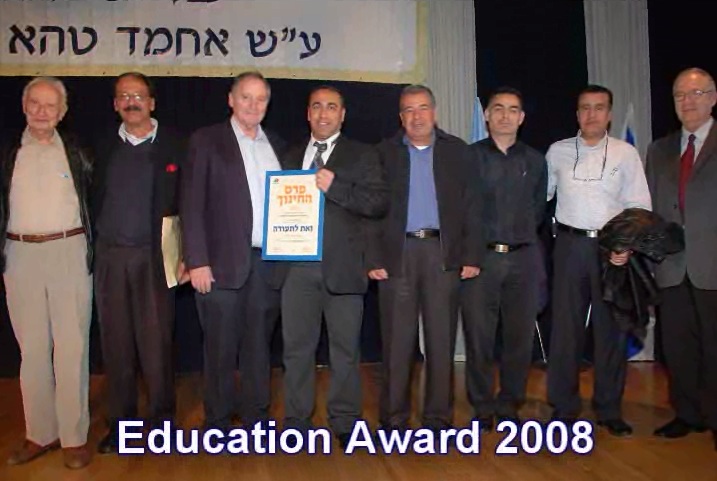
On July 14, 2010, Maharishi’s Global Family Chat included a special broadcast on News from Israel involving the Transcendental Meditation program. Dr. Reuven Zelinkowsky reported on the success of implementing the TM porgram in the Daburiya High School, an Arab school in Israel that was about to close due to poor academic performance by the students and problems in the school. After the TM program was implemented, there were dramatic improvements in all areas including the school achieving 2nd place in the National Education Award in 2008 and placing 3rd in the National Education Award in 2009. This is the first time that any school in Israel received the award in two consecutive years.

The principal of the Daburia High School, Abed Elsalam Masalcha, explained why his school received the 2008 National Education Award. He said it was because of the way they tackled the discipline problem—with meditation. “Meditation is at the core of everything we did.” He went on to elaborate how using the Transcendental Meditation program addressed and solved the core problem of disciplining a student’s behavior.

We have seen that in order to change the student’s behavior, or to overcome the discipline problem, we need to change something within the students. What I mean to say that it is not enough to make rules and try to make everyone follow them. In fact you don’t change their behavior at all. That is why we adopted meditation. So practicing meditation, the students will start to really change. Not just for a year, or two or three. We are giving the student the possibility, that throughout his life, he will not only succeed at school for a short time, but through the meditation, also succeed throughout his life.

When the school received the 2009 National Education Award, the committee justified its decision with these words:

The award was given to the school for its program in preventing violence and improving the school’s environment based on the Consciousness-Based Education program. This Consciousness-Based Education program is based upon the development of both students and teachers abilities and uncovers the unlimited creative potential of the human being. The program prevents the problems by tackling them at the root and provides the base for actualization of both the scholastic aspirations of the students, teachers and parents.

The most important element of the Consciousness-Based Education program is the Transcendental Meditation program. It is a simple, natural, mental technique that improves behavior and the ability to learn. It elicits success and enjoyment in learning, creates a focused atmosphere in the classroom, improves academic achievement, increases self-esteem, reduces violence and chaos and increases teacher satisfaction in their work.

The teachers, school board and parents are involved at all levels of the program and closely follow the process in the school.

You can also view the Daburiya High School video, The Second Miracle of Daburia here: http://www.cbe.org.il/video/daburia_jE.wmv. The You Tube short link is: http://bit.ly/bYF6On. If you wish to download the actual video go to: http://www.cbe.org.il/video/cbe.htm. This miracle is happening in hundreds of schools around the world. For details visit www.davidlynchfoundation.org.

To become more competitive, Trinity College Women’s Squash Team tries out a new technique — the Transcendental Meditation Program

July 14, 2010

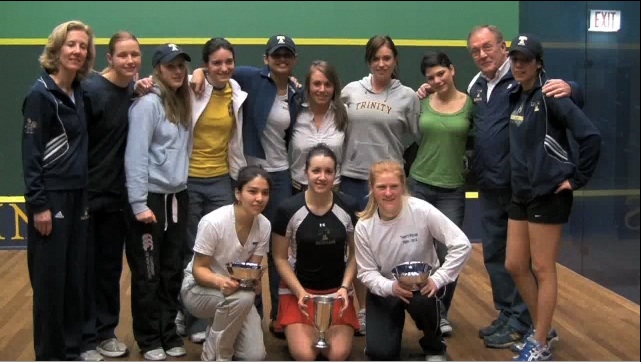
This video reports on the use of the TM Program by the 2009–2010 Women’s Squash team at Trinity College in Hartford, Connecticut.

The whole team including the coaches learned the TM technique. They finished the season as the #3 Women’s Squash team in the country.

Trinity College Psychology major Emily Lindon did her thesis on the Effects of Transcendental Meditation on Perceived Self-Efficacy of College Students. One of the groups she researched was the Women’s Squash Team. Emily found significant increases in self-efficacy among the pre- and post-tests.

The Trinity Women’s Squash Team was trained in the Transcendental Meditation technique through a grant from the David Lynch Foundation. TM is a technique for focus and stress reduction. It is not connected to any religion or belief system but rather it is a simple, effortless, natural meditative technique with scientifically proven effectiveness. The team placed third nationally for the 2009/2010 college squash season. For more information, contact Dr. Randy Lee at randolph.lee@trincoll.edu

Dr. Lee posted this 8 minute video of the winning Trinity College Women’s Squash team on You Tube. The  video was produced and directed by Lynn Kaplan. Peter Trivelas was the cameraman and editor. Executive producer was the David Lynch Foundation. It’s also posted on David Lynch Foundation Television http://dlf.tv/2010/trinity-squash.

Global Good News‘s Excellence In Action posted an article on this story: Peak Performance: Exploring a transcendental technique for success.

See a new article on this subject written by Linda Egenes: Transcendental Meditation and The Mind of an Athlete (December 17, 2014).

ABC News/Nightline: Transcendental Meditation in Vedic City, Iowa

July 6, 2010

Transcendental Meditation Thrives in Iowa

Adherents of Transcendental Meditation Have Called Hawkeye State Home Since ’70s

By JOHN BERMAN and MAGGIE BURBANK

July 5, 2010 —
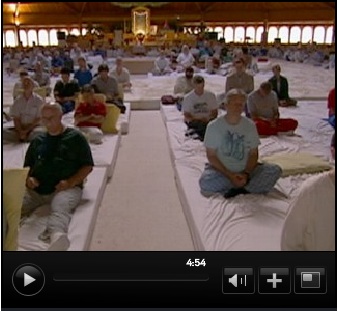
Travel to an Iowa cornfield to find an entire town that meditates en masse. More Photos

When you think of Iowa, you think of cornfields, you think of caucuses, you think of old-fashioned country-living.

Chances are, you don’t think of meditation and communal living.

Welcome to Maharishi Vedic City, Iowa — the only city in the country built on the tenets of transcendental meditation, for meditators, by meditators.

Meg and Erik Vigmostad moved here from St. Louis in 1982.

“We wanted to come to a meditating community,” said Meg Vigmostad. “We had two children at the time, one of them was an infant, and we felt like it was the best place to bring up our children.”

Watch the full story tonight on “Nightline” at 11:35 p.m. ET

Vigmostad acknowledged that the couple’s families thought they were “crazy” for making the move. Crazy, because those words, “transcendental meditation,” sound, well, different. Many people first heard of transcendental meditation, or TM, in the 1960s, when the Beatles started following Maharishi Mahesh Yogi, the official founder of TM.

“Transcendental meditation is a simple technique practiced for about 15-20 minutes sitting comfortably in a chair with the eyes closed,” said Bob Roth, national director of the TM program. “It allows the body to get a profound state of rest while the mind just settles down and experiences a state of inner wakefulness, inner calm, inner coherence.”

The followers of Mahesh Yogi — mostly from East and West Coast universities — moved to Iowa en masse in 1974 to set up their own college, the Maharishi University of Management. The group chose Iowa because that is where they could find the land.

Now the settlement features two huge domes, one for men and one for women, with residents streaming in to meditate together twice a day.

But at the university and in the city, the commitment to Vedic principles of natural law and balance, derived from ancient Sanskrit texts, goes far beyond meditation. The community has banned the sale of nonorganic food within its boundaries. And that’s not all.

“The primary characteristics of Vedic architecture, the most obvious one, is that ideally, buildings face east, the direction of the rising sun,” said Jon Lipman, the country’s leading Vedic architect.

‘Greater Happiness’

Lipman says the buildings at the university and most new houses in town are constructed in line with ancient precepts.

“Just like the organs in the human body, there is a right place for different kinds of functions within a building,” Lipman said.

“And so, a kitchen is typically in one location. A living room in a house is typically in another location.”

Every Vedic building has a silent core known as a Bramastan, which is lit by a skylight and is never walked on. Lipman claims miraculous effects.

“The results are that, families find that their lives are improved, that there’s greater family harmony, that there is greater financial success, there’s greater happiness,” said Lipman. “There are many many cases where members of a family had disharmony between them, and it dissolved when they moved into a Vedic home. There are many cases where even such things as chronic diseases were abated by moving into a Vedic home.”

Lipman said “it’s a real challenge” to be poor, unhappy or unhealthy if you live in a Vedic building.

The Vigmostads live in a Vedic house, and seem like happy customers.

“It feels harmonious, it feels orderly, there’s a lot of silence here that was definitely not in our other house that we owned,” said Meg Vigmostad.

The talk of order and inner peace might sound unbelievable. But it is also the work of Vedic City to make it all … believable. Fred Travis, director of a university facility called the Center for Brain Consciousness and Cognition, demonstrated an EEG monitor of neurological electrical activity that he said shows that TM makes the brain more organized.

“What this is measuring is the electrical activity of the brain,” Travis explained as a member of the community hooked up to the machine sat and meditated.

“You see this one going up and down?” Travis said, pointed to a gauge. “Look at the one next to it. It goes up and down in a similar way. This is called coherence. When the similarity of two signatures are very close, it suggests those two parts of the brain are working together.

Neurologist Gary Kaplan, a proponent of TM, said such “coherence” will bring happiness, success — even world peace.

“What we notice is that this electrical activity becomes more harmonious or coherent between left and right hemispheres,” Kaplan said. “There have been studies that have documented that the TM technique, when practiced in large groups, seems to have some effect on society in general, whether it’s in war-torn areas where people are sitting to meditate together, or in high-crime areas that the trends reverse when you have larger groups meditating together.”

David Lynch and TM

It is a lot to digest — but then you don’t really have to. The TM followers insist they are not a cult. They all have normal jobs, for the middle of Iowa, and they are not out to recruit you. They just want you to know the option is there.

Famed filmmaker David Lynch spends a lot of time in Vedic City. He started the David Lynch Foundation, which, in the last four years, has provided scholarships for over 100,000 kids to learn to meditate for free in schools across the country.

“It’s not a religion. It’s not against any religion, it’s not mumbo-jumbo. It truly does transform life,” Lynch told ABC News. “Kids come to school and they meditate together for 15 minutes in the morning. And before they go home they meditate for 15 minutes. A lot of them come from, you know, bad situations, and so this gives them this thing you know, at the beginning and the end of the day, the rest of the time you just watch the violence stop. Watch relationships improve. Watch happiness in the hallways, in the classroom, watch creativity flow more and more, watch that heavy weight that we are living under gently lift away.”

“Nightline” was told there wasn’t enough time to properly learn transcendental meditation on a short trip to Vedic City. But to get a feeling of the Vedic way of life, we did visit the Ayurveda Health Spa in Vedic City — the leading spa of its kind in the country. Ayurveda is a system of health and healing involving food and behavior that originated in India thousands of years ago.

“We take your pulse, we put three fingers on the right hand,” explained Mark Toomey, an Ayurvedic health expert at the spa. “And it’s what I would say is like plugging into the inner intelligence of the body.”

Toomey said he can learn a lot from feeling a person’s pulse. He demonstrated on our correspondent.

“It’s a strong pulse,” Toomey said. “That means that, good expression of intelligence. It’s clear. Your pulse has a little bit of tension there, so maybe you’re working a little too hard, too many deadlines.”

Next up was the Shirodhara treatment.

“So what we’re going to be doing is pouring this oil for about 20 minutes on your forehead, in a continuous stream,” said Toomey. “Your job is just to relax and enjoy.”

And what’s so wrong with that? In Vedic City, they have made that their way of life … in the middle of Iowa.

“We really have all we need here,” said Meg Vigmostad. “You can go to a city anytime. But this is sort of a haven, you know? And it’s a place of comfort, and community.”

Copyright © 2010 ABC News Internet Ventures

This edited version finally aired: http://bit.ly/cDxWqj and was posted earlier this year: http://wp.me/pD0BA-Gp


The Connexion, France’s English-Language Newspaper, interviews David Lynch

June 27, 2010

David Lynch’s French connections

Connexion edition: May 2010

FRANCE has been kind to David Lynch; he’s an officier of the Légion d’honneur (a rare thing for a foreigner); French production companies have supported his last three films and he has twice won best foreign director from the French-based César cinema awards. The feeling is mutual he tells Connexion.

You’re quite a frequent visitor to France

This is one of my favourite places in the world. I’ve had a lot of support in France for my films and I love Paris. I’m doing a lot of work here now. I’m here on average maybe twice a year.

Do you see much of the rest of the country at all?

Well, when I go to the Cannes Film festival I see the south of France but mainly I’m coming to Paris. I stay in a hotel here.

Would you like to live here?

For sure, if I have the money I’d like to get a place here. It would be in Paris. I’m doing a lot of lithographs here. I’m working in a place called Idem Print Studio. It’s incredible – a 150 year old printing shop. It’s the real thing. It’s got a mood you can’t believe.

You’ve had exhibitions here as well

Yes I had a big exhibition at the Fondation Cartier and a big exhibition of lithographs in the north of France.

When did you first visit France?

My first trip was 1965. I came here with my friend Jack Fisk. I was kind of lost and just travelling around.

What were your first impressions?

Paris is I think the most beautiful city in the world. It’s inspiring to me. It’s a place that’s just packed with all the arts. It’s a great, great celebration of all the arts. It’s just got the feel.

Has it ever inspired any scenes in your films?

(pauses) Let’s see. I don’t know. I don’t think so…but it’s still inspiring.

You made The Cowboy and the Frenchman in 1988 for a project with Le Figaro (The French as seen by…) Have your opinions changed much since then?

We live in a world of change. Everything is always changing but that film was kind of a cliché – both an American and French cliché film and there’s probably still truth to that.

What would you say about the French away from the clichés then?

Well as I said, they’re lovers of art. They champion the arts more than any other country in the world, they support the arts more than any other country I think, and this is very important to me. Plus they’ve got great food, great wine, incredible knowledge of materials and design. It’s a really high-end life.

Do you have any particular things that you like to do when you’re in France?

I like to work.

Is it always work or do you get to relax here?

I usually come to work and that’s the most enjoyable thing. I don’t really like vacations. I like to work here a lot.

Who are your influential French figures?

I like so many of the artists that work in France. When you come here and connect the place to the work, you see that it must have been so inspiring for them to be here. It sort of feeds the work this place. It’s a great country to live the artlife.

Would you ever make a film here?

For sure, if the ideas came. You don’t just arbitrarily say ‘I’m going to make a film in Paris.’ The ideas have to come and then if the ideas came and Paris was the setting, then absolutely, it would be a joy.

There’s some bits of French that makes their way into your films. Do you have any affinity for the French language?

No I don’t speak French. I just murder the language.

Why choose to use French?

Things appear from ideas. You don’t just say I want some French here. Ideas come along and who knows exactly how that happens but they come along and then there it is.

So it’s like there’s a little bit of France swimming around out there?

There’s everything swimming around and sometimes that will conjure an idea, that’s how it all goes. Ideas, ideas, ideas.

Do you have any particular favourite foods in France?

Oh yes, I like the foie gras. I like vin rouge Bordeaux. I like all the French pastries and I like the galettes. It’s hard to get a bad meal in France.

What’s brought you and your meditation project to France?

The David Lynch Foundation for Consciousness-Based Education and World Peace has helped start well over 100,000 students to meditate. It’s in several schools in US, both private and public. Some of these were the worst schools in their state and in one year the schools had been completely changed. It’s not just France it’s in so many countries now. There’s a project in the West Bank in Palestine, in Africa, many countries in Europe, Iceland, Canada.

What’s the connection that’s brought you to Lille?

The Maharishi Mahesh Yogi came over to Lille, 50 years ago this month. It’s a celebration of him coming to France.

How do you feel Transcendental Meditation (TM) is received in France as opposed to the US?

France and Germany will probably be among the last countries where the penny drops and they say ‘wait a minute this is a great thing’. I base that on many, many misunderstandings. The misunderstanding of this world ‘cult’ or ‘sect’ which is very unfortunate. This is absolutely not true. It’s not a religion or against any religion. It’s a technique, an ancient form of meditation for the human being that opens the door to the treasury within; unbounded, infinite eternal consciousness. Life improves almost over night when people experience ‘the big self’ – the unified field within. The lack of knowledge and misunderstandings are ridiculously huge here.

But little by little they’re saying there’s got to be something to this. In other places the misunderstandings have almost disappeared and it’s a normal thing for people to meditate in schools, in homes, wherever. It’s as normal as breathing and life improves rapidly. The world is full of stress and this is a stress buster beyond the beyond. All these stress related illnesses that people suffer, so much of the behaviour is dictated by stress – you practise this thing and it frees you from stress.

Grades go up, relationships improve, health improves. Everything gets better.

The main sticking point for France is not the meditation aspect but the money aspect – how would you respond to critics?

That’s another crazy thing. People will spend money on almost anything but when it comes to meditation they say it’s a scam. It’s because they haven’t yet had the experience or they don’t see the change in one of their friends who’s had this experience. Once they start seeing this transformation in other people they realise that this is nothing to spend for this life transforming thing. The money they save from the doctors is going to be huge. You want a legitimate teacher of Transcendental Meditation and it’s about 90 mins a day over four days to learn the technique. The teachers, they need to live and have a place to stay and a car to drive. It’s so well worth the money there’s nothing to talk about.

You’ve met President Sarkozy – how do you find him?

I love him. I think he’s filled with energy. He’s got a great energy and a great caring for France.

You’ve spoken with him about TM as well. Has he helped you with this project up in Lille?

No, because I think people are not quite ready to go out on a limb and say let’s do this thing because of these strange misunderstandings or lack of knowledge but the times are changing. To experience this is life transforming.

You put it in a school that’s in trouble, you put it into a school that’s in great shape it will just get better. It’s a human being thing.

Awards, art and films

Won the Cannes Film Festival’s Palme d’Or for Wild at Heart in 1990. In 2002 he presided over the festival jury.

Won two Cesar Awards (the French equivalent of Baftas) for Elephant Man in 1982 and for Mulholland Drive in 2002.

He was made a chevalier of the Légion d’honneur in 2002 and then made an officier by President Nicolas Sarkozy in 2007.

Sarkozy says he is a fan, declaring that Lynch’s Elephant Man convinced him that “cinema was a highly important matter”

An exhibition of 25 years of Lynch’s work as a painter, sculpture, photographer and musician entitled The Air Is On Fire went on show in Paris in 2007 at the Fondation Cartier.

From his 2006 book Catching the Big Fish:
“I love the French. They’re the biggest film bugs and protectors of cinema in the world. They really look out for the filmmaker and the rights of the filmmaker, and they believe in final cut. I’ve been very luck that I’ve been in with some French companies that have backed me.”

When American TV channel ABC dropped Mulholland Drive (originally conceived as a series) after seeing the pilot episode it was French production company StudioCanal that provided the funding to turn it into the award-winning film.

StudioCanal also provided funding for Lynch’s Inland Empire and The Straight Story.

Lynch is by no means guaranteed hits among audiences in France. At the Cannes festival in 1992 his film Twin Peaks: Fire Walk with Me was booed following its screening.

Transcendental Meditation – a way for peace that rarely passes quietly

Transcendental Meditation is never far from criticism, principally for its direct approach of charging money for courses instructing people how to carry out the technique. It was founded by the Maharishi Mahesh Yogi in the 1950s and spread around the world as famous faces such as The Beatles, The Rolling Stones, Clint Eastwood, Jane Fonda and Mia Farrow took it up.

In 2005 David Lynch announced that he had been practising the technique for 32 years.

That year he founded the David Lynch foundation to promote meditation in schools. The foundation’s latest project aims to reduce stress and violence at 10 schools in Lille by funding meditation courses for students and teachers.

Milvudes (Mission interministérielle de vigilance et de lutte contre les dérives sectaires) which monitors religions and possible cults in France says their main concern with TM is a “lack of transparency” within the group. Milvudes spokeswoman Claire Barbereau said: “It is presented as a technique for meditation but there is a strong spiritual movement in the background.” She said people could find themselves pushed to adhere to the movements beliefs which were not necessarily linked to meditation.

Ms Barbereau said they had received no complaints about the group for many years. Milvudes does not keep a list of ‘cults’ “because we are concerned with what they do, not what they are.” It was up to the Ministry of Education to see whether the David Lynch Foundation’s plan was an effective way of helping children improve performance at school, she added.

David Lynch interviews Paul McCartney about meeting Maharishi and his first meditation

April 30, 2010

Here are links to two articles on the TM.org Blog with videos of David Lynch interviewing Paul McCartney about his experiences with Maharishi Mahesh Yogi and Transcendental Meditation. This was recorded by David Lynch Foundation Television during the rehearsal for the Change Begins Within Benefit Concert to teach 1 million at-risk students to meditate. Many celebrities performed on that April 4, 2009 concert. It will be broadcast on PBS starting April 29, 2012, 3 years later, on New York’s channel THIRTEEN.

Here is Heather Harnett’s opening, written a year after the concert, which will now be broadcast on PBS three years later, two years after Heather’s writing about it, all in the month of April.

What a night! A little more than a year ago, on April 4, 2009, former Beatle Sir Paul McCartney headlined a historic, one-night-only benefit concert promoting the Transcendental Meditation technique for the David Lynch Foundation at Radio City Music Hall in New York, entitled “Change Begins Within.” Paul McCartney was joined onstage by his former band-mate Ringo Starr and several other amazing musicians, including Donovan, Eddie Vedder, Sheryl Crow, Ben Harper, and Moby. Six-thousand energized music fans, foundation well-wishers, and meditation supporters packed the hall for what several press reports called “the musical event of a lifetime.”

Before the concert, before the hubbub and the crazy excitement and the buzz, before it all, David Lynch sat down, individually, with Paul and with Ringo for a quiet talk on camera. They candidly discussed their 40-plus year Transcendental Meditation practice, their meetings with Maharishi Mahesh Yogi, and how Maharishi and meditation have influenced their lives. It was the first time in decades that Paul and Ringo had spoken of those days that historians have said helped to transform the music, the culture, and the future of the world.

Click here to read the rest of the article: David Lynch Interviews Paul McCartney About Transcendental Meditation (Part 1) and watch Part 1 of the interview followed by Part 2, where Paul McCartney remembers his first meditation with Maharishi.

David Lynch interviews Paul McCartney about Meditation and Maharishi

David Lynch interviews Paul McCartney (Part 2)

See Ringo Starr Interview from the Change Begins Within Benefit Concert and The former Beatles Paul McCartney and Ringo Starr reunion for David Lynch’s benefit concert airs on New York’s THIRTEEN, Sunday, April 29.

David Lynch on Transcendental Meditation: an interview with David Servan-Schreiber in Paris

April 26, 2010

What is Transcendental Meditation?

David Lynch Interview with Dr. David Servan-Schreiber

Paris, April 17, 2010

David Lynch, director, tells David Servan-Schreiber, MD, PhD, about the benefits of a daily use of Transcendental Meditation. Mr. Lynch is working on a film about the life of Maharishi Mahesh Yogi, who brought back Transcendental Meditation in Occidental countries in the 60s. Interviewed in Paris, April 17, 2010. Here is a link to the full interview posted on DailyMotion: http://dai.ly/a9wgDS.

Visit the David Lynch Foundation to see the amazing work that is being done for at-risk populations: www.davidlynchfoundation.org

This interview was later uploaded onto YouTube in 4 parts by on Jun 22, 2010, in English and French versions. It includes this bio on the interviewer, Dr. David Servan-Schreiber.

Paris, 17 April 2010. Dr. David Servan-Schreiber, MD, PhD, is a French physician and neuroscientist. Clinical professor of psychiatry at the University of Pittsburgh School of Medicine, he is also co-founder of the Center for Integrative Medicine at the University of Pittsburgh Medical Center. Following his volunteer activity as physician in Iraq in 1991, he was one of the founders of the US branch of Médecins Sans Frontières (Doctors Without Borders), the international organization that was awarded the Nobel Peace Prize in 1999. He also served as volunteer in Guatemala, Kurdistan, Tajikistan, India and Kosovo. In 2002 he was awarded the Pennsylvania Psychiatric Society Presidential Award for Outstanding Career in Psychiatry.

Author of “Healing Without Freud or Prozac” (translated in 29 languages, 1.3 million copies sold), and “Anticancer, a New Way of Life” (translated in 35 languages, New York Times and international best-seller, 1 million copies in print) in which he discloses his own diagnosis with a malignant brain tumor at the age of 31 and the treatment program that he put together to help himself beyond his surgery, chemotherapy and radiotherapy.

Dr. David Servan-Schreiber is also a regular columnist for Ode Magazine and other publications, and the founder of the French anti-cancer site Guerir.org (“Healing”). See also www.anticancerbook.com.

I just checked his website and discovered that after a 20-year battle with cancer, David Servan-Schreiber passed away on July 24, 2011.

France24 Interview – David Lynch, film director

April 23, 2010

In this edition our guest is American filmmaker David Lynch, famous for directing such films as ‘Elephant Man’ and ‘Mulholland Drive’. But today he tells us about his experiences in Transcendental Meditation, which he has been practicing for over 30 years. This is a two-part interview.

David Lynch, film director

David Lynch, film director (part two)

THE F24 INTERVIEW