Archive for the ‘Peace’ Category

The Men Who Stare in Peace: An Interview with Dr. David Leffler | plausible futures newsletter

May 6, 2010

plausible futures newsletter

news and analysis for future studies since 1999

The Men Who Stare in Peace: An Interview with Dr. David Leffler

In the movie The Men Who Stare at Goats, military interest in psychic research is portrayed as an utter failure. The movie is not meant to be science journalism but pure entertainment. However, buried beneath the satirical and banal surface of this movie lie many interesting scientific theories. A proposed theory of a collective consciousness is one of them.

The origins of our understanding of collective consciousness can be traced to the Vedic texts of ancient India. This multidimensional science of the mind had its revival with such luminaries as Gustav Fechner, William James, Emile Durkheim, and C.G. Jung. Recent advances in quantum physics, especially Unified Field Theory, are now providing some fascinating parallels with these schools of thought.

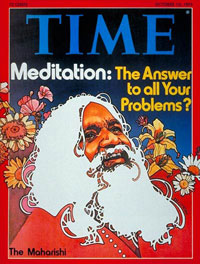
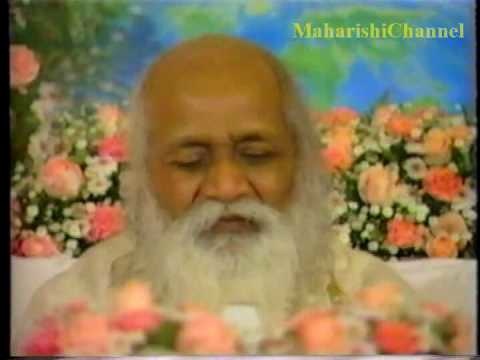
The late Vedic scholar Maharishi Mahesh Yogi majored in physics at the University of Allahabad and later revived the concept of collective consciousness from the ancient Vedic tradition of India. He proposed that through the practice of his Transcendental Meditation (TM) program and its advanced techniques the unified field could be directly contacted and experienced. Through this process he predicted that both stress in the individual and stress in the collective consciousness of society could be reduced for the betterment of mankind. Scientific research later bore out his prediction, and scientists named the social dimension of this phenomenon “The Maharishi Effect” in his honor.

Harvard-trained physicist Dr. John Hagelin, whose research in quantum field theory includes some of the most cited references in the physical sciences, was one of those pioneering scientists who tested Maharishi’s theory and wondered how such an action-at-distance effect might work. In his article “The Power of the Collective” published by Shift: At the Frontiers of Consciousness, Hagelin says:

But how we do have such an influence on one another at a distance? There are no clear answers yet, but I believe that the clue lies in the notion that beneath the physical levels of human existence – our bodies and the quantum realm of molecules, atoms, quarks, and leptons – is a unified field of pure, abstract, universal consciousness. It’s at this level of reality, this level of nonlocal mind, where you discover that the qualities of space are, at least in theory, capable of accommodating extraordinary experiences…. If we assume that at our core level of being we are all intimately connected in a unified field where we are all one, it becomes very easy to understand how we influence one another. And when we contact this unified field of being, we enliven that unity, that harmony, and that coherence in the collective consciousness of society.

The Maharishi Effect is this positive transformation of social trends created by the enlivenment of the unified field through the TM and TM-Sidhi program. If more than one percent of a population is meditating regularly or if large groups practice the advanced TM-Sidhi program twice a day, extensive peer-reviewed research indicates that stress decreases in the entire population. This effect is now being harnessed for crime reduction, peace-keeping and conflict prevention. Even in war zones, meditation is becoming accepted as an effective stress management tool for citizens, soldiers, and society at large. An online video (1:13:00) specifically explaining the defense applications of the Unified Field by Dr. John Hagelin is available at the International Center for Invincible Defense website. A transcription and full-sized images are available here.

Skeptics point out that if the Maharishi Effect really works, then why didn’t it prevent the social stress responsible for the 1950-1951 annexation of Tibet? At the time more than 5,000 monks were said to be meditating in various monasteries throughout the country. Proponents of the TM program point out that scientific research shows that meditation techniques differ in procedure, EEG patterns, neural imaging patterns and benefits. They also attest that the TM program and its advanced practices are the only meditation methods verified by peer-reviewed research to reduce social problems like crime, terrorism and war.

Do these outcomes sound unbelievable or too good to be true? Many find these ideas rather exotic, and others wave them off as another New Age scam. Documentary films like What the Bleep Do We Know and The Secret and books like The Holographic Universe may be great entertainment to some, but do they have any basis in good science?

I had the opportunity to interview Dr. David R. Leffler, a US Air Force Veteran with a Ph.D. in Consciousness-Based Military Defense, about this new approach to peace:

(more…)

David Lynch on Transcendental Meditation: an interview with David Servan-Schreiber in Paris

April 26, 2010

What is Transcendental Meditation?

David Lynch Interview with Dr. David Servan-Schreiber

Paris, April 17, 2010

David Lynch, director, tells David Servan-Schreiber, MD, PhD, about the benefits of a daily use of Transcendental Meditation. Mr. Lynch is working on a film about the life of Maharishi Mahesh Yogi, who brought back Transcendental Meditation in Occidental countries in the 60s. Interviewed in Paris, April 17, 2010. Here is a link to the full interview posted on DailyMotion: http://dai.ly/a9wgDS.

Visit the David Lynch Foundation to see the amazing work that is being done for at-risk populations: www.davidlynchfoundation.org

This interview was later uploaded onto YouTube in 4 parts by on Jun 22, 2010, in English and French versions. It includes this bio on the interviewer, Dr. David Servan-Schreiber.

Paris, 17 April 2010. Dr. David Servan-Schreiber, MD, PhD, is a French physician and neuroscientist. Clinical professor of psychiatry at the University of Pittsburgh School of Medicine, he is also co-founder of the Center for Integrative Medicine at the University of Pittsburgh Medical Center. Following his volunteer activity as physician in Iraq in 1991, he was one of the founders of the US branch of Médecins Sans Frontières (Doctors Without Borders), the international organization that was awarded the Nobel Peace Prize in 1999. He also served as volunteer in Guatemala, Kurdistan, Tajikistan, India and Kosovo. In 2002 he was awarded the Pennsylvania Psychiatric Society Presidential Award for Outstanding Career in Psychiatry.

Author of “Healing Without Freud or Prozac” (translated in 29 languages, 1.3 million copies sold), and “Anticancer, a New Way of Life” (translated in 35 languages, New York Times and international best-seller, 1 million copies in print) in which he discloses his own diagnosis with a malignant brain tumor at the age of 31 and the treatment program that he put together to help himself beyond his surgery, chemotherapy and radiotherapy.

Dr. David Servan-Schreiber is also a regular columnist for Ode Magazine and other publications, and the founder of the French anti-cancer site Guerir.org (“Healing”). See also www.anticancerbook.com.

I just checked his website and discovered that after a 20-year battle with cancer, David Servan-Schreiber passed away on July 24, 2011.

My Son’s Sensei: A Tanka about my son’s Aikido teacher

April 21, 2010

My Son’s Sensei
A tanka about my son’s Aikido teacher

Rooted to the ground
She repels her attackers
Flowing, not moving.

In storms, trees bear great burdens
Bending, not breaking.

—Ken Chawkin

(more…)

Ireland’s Edwin McGreal interviews Mike Love for The Mayo News

April 6, 2010

INTERVIEW Mike Love of The Beach Boys

The legendary Beach Boys singer on Pet Sounds, Paul McCartney, clean living, Brian Wilson, modern music and more.

Monday, 05 April 2010 14:28

The beach boys

Mike Love, not war

The Beach Boys will bring some welcome Californian sunshine to Castlebar this June. Edwin McGreal spoke to founding band member, music legend Mike Love last week.
Mike Love is not your typical rock’n’roll  star. No sordid tales of debauchery, very little evidence of skeletons in his closet and, nearly 50 years after The Beach Boys were formed, he’s still going strong, playing around 150 shows a year.
Love, now aged 69, is a very relaxed and positive person, which is not surprising when you listen to such upbeat songs as ‘Good Vibrations’ and ‘I Get Around’, summer anthems that have put a pep in the step of millions for over 40 years.
And he and The Beach Boys will bring their sounds of summer to the TF Royal Theatre on June 26 (albeit minus Brian Wilson and Al Jardine).
So, still going strong all these years later, where does he get his energy?
“We don’t burn the candle at both ends like we might have done in the early 60s,” Love explained, speaking from his southern California base last week. “The Beach Boys are primarily a vocal group, we always emphasise our harmonies, and you can’t sing those kind of harmonies if you’re going to destroy yourself. I personally learned transcendental meditation [from renowned Indian guru Maharishi Mahesh Yogi, who taught many celebrities, including the Beatles]. I keep doing that every day and it is profoundly relaxing and repairs a lot of wear and tear mentally, emotionally and physically. It gives you a really nice outlet for stress rather than taking to the bottle or smoking a lot of pot or other drugs.
“People in my own family like my cousin Dennis [Wilson, founding member] became addicted to alcohol and various types of drugs and he ended up drowning in 1983, long before he should have passed away. Then my cousin Carl [Wilson, founding member] passed away of lung cancer 12 years ago. But then he started smoking when he was 13 so these lifestyle choices we make can have a tremendous impact on your health and well-being.”
Musically, the ’60s was a roller-coaster journey for The Beach Boys. There was the outstanding success of their totemic album ‘Pet Sounds’ in 1966, but the release of ‘Good Vibrations’ the same year is one Love looks back on with particular fondness.
“I think, artistically, ‘Good Vibrations’ has to be right up there. It stands on its own. It is so unique. Also I wrote the words and I came up with the chorus – ‘I’m pickin up good vibrations/she’s giving me excitations’. It stands the test of time and is still an amazing song today, that is the song I was happiest to be involved with.”
Subsequent decades didn’t prove as successful, with the exception of ‘Kokomo’ reaching Number 1 in 1988. Love admits that Brian Wilson’s well-publicised problems did play a part, but it wasn’t all bad for the band to be minus their front man.
“Brian pretty much became a recluse for several years and he didn’t take as dynamic a part in the production of our recordings. My cousin Carl played a bigger part, Bruce Johnston played a bigger part. Instead of Brian being ‘the Stalin of the studio’ as I used to call him, it became a bit more democratic. I don’t think it was reasonable that the [early success] would keep up forever, but the ’60s did provide the foundation of our continued success to this day.”
Moving to modern day musicians, Love has no particular favourites, but he’s exposed to the full gamut by his children. Some good, some not so good.
“I unfortunately get exposed to some rap music from my 14-year-old daughter but I also get exposed to Leona Lewis, Beyonce and Alicia Keys, those are pleasant exposures. I don’t think I’m obsessed with any new artist but I’m not against them either. I’m just as likely if I’m driving around to throw on the oldies channel just out of morbid curiosity to see if they’re going to play a Beach Boys song,” admitted Love, laughing at the thought.
Love hints that talks have taken place of a touring reunion with Brian Wilson and Al Jardine to mark the 50th anniversary of the band. For now, it is Love, together with long-time member Bruce Johnston and others who tour under the Beach Boys name – but the dynamic is the same, according to Love.
“What we like to do every night is prove we can recreate those songs like they’re meant to be sung. We have got nothing but compliments recently on how fantastic the show sounds …The special part [of touring] is recreating those songs and doing the absolute best job we can and seeing the audience join in and have a great time with us.”
Still sending those good vibrations.

Elsewhere on mayonews.ie
INTERVIEW Click here for the full interview
AUDIO Click here for Audio interview
COMPETITION Click here win tickets

Give TM a chance to prevent more wars

March 28, 2010

News from southeastern Connecticut | Click here for photos of Maharishi, and with The Beatles, in Bangor, Wales, August 24+26, 1967.


Article published Mar 28, 2010

All these ex-military dudes are saying is give TM a chance

By RAYMOND E. SEEBALD and DAVID R. LEFFLER

Wars start in the minds of men, and cycles of conflict ensue. So, too, can wars be prevented in the minds of men, but not always in the conventional way one might think. A new technology of defense has now emerged from a most unexpected quarter and has scientifically shown itself to have intriguing potential to prevent war and create peace.

Here’s the background: The underlying cause of war is accumulated social stress. Stress builds up. Differences arise. Groups take sides. Mediation fails to resolve the differences. Enemies form and arm.

Military organizations theoretically provide a deterrent to conflict, but when social division and enemies directly challenge the execution of national policy, military force can be activated and deployed to protect the nation. Armed conflict follows, with unpredictable outcomes. Even if conflict temporarily solves the problem for the winner, the underlying social stress is increased, fueling more violence and more terrorists.

No stress, no tension

In contrast, the absence of collective stress translates into the absence of tension between competing sides, thereby reducing the probability of hostilities.

Today, an opportunity exists to overcome this cycle of conflict by deploying a scientifically verified technology of defense that neutralizes social stress.

This technology operates on the most fundamental and powerful level of human consciousness, and is accessed and harnessed through a surprising and most unconventional channel-meditation.

In more than 50 studies published in scientific journals, Transcendental Meditation (TM) has been documented to powerfully reduce violence and criminal activity and even to calm open warfare.

Here’s how we believe it works: Just as radio or TV transmitters beam signals through an unseen electromagnetic field, groups of meditating people can generate a strong wave of coherence and positivity through an underlying field of collective consciousness. Stress and tension diminish. The larger the group, the greater the effect.

Specifically, the studies demonstrate that when the required threshold of meditators is crossed – approximately the square root of 1 percent of a given population – crime goes down, quality of life indices go up, and war and terrorism abate. Scientists have named this phenomenon the Maharishi Effect, after the founder of Transcendental Meditation, the late Maharishi Mahesh Yogi, who envisioned this possibility for creating global harmony.

In 1993, a two-month Maharishi Effect experiment was implemented in Washington, D.C. The findings published in Social Indicators Research showed that crime fell 24 percent when the peace-creating group reached its maximum size.

A decade before, during fighting in the Middle East, large assemblies of meditators repeatedly caused battlefield casualties to drop dramatically. A global-scale study published in the Journal of Offender Rehabilitation documented a 72 percent drop in international terrorism.

Our armed forces are responsible for defending the country. We suggest they consider adding an unconventional force – a consciousness corps, so to speak – to enhance their mission. Create a coherence-creating group of meditating soldiers exceeding the square root of 1 percent of the population of the United States. It would only take approximately 1,750 personnel.

Really not far-fetched

Admittedly, the idea of fighting terrorism with meditation sounds far-fetched. But the idea of an Internet would have seemed crazy, too, just a generation ago. Now, we communicate across oceans and access a universe of information simply by typing into some invisible field.

At one time, meditation was considered “mystical.” Now, doctors prescribe it and even the government funds research on the health effects of meditation. That’s because hundreds of studies show it effectively reduces individual stress and improves health. Why not put it to the test to improve global health?

As part of its responsibility to protect the nation, the U.S. military is obligated to thoroughly examine scientifically proven methods for preventing war and terrorism. All that is necessary is to provide the proper training for a group of military personnel or indeed, any large group within the country.

With all the conventional methods we utilize to protect life, liberty, and freedom, we should also be open to trying new, creative ideas, no matter how unconventional they seem.

Retired Coast Guard Capt. Raymond E. Seebald was a military aide to presidents Ronald W. Reagan and George H.W. Bush from 1986-1990. As captain of the Port in Chicago he developed post 9/11 security standards for U.S. ports. He graduated from the U.S. Coast Guard Academy in 1977. David R. Leffler is an Air Force veteran and executive director of the Center for Advanced Military Science (CAMS). He served eight years in the U.S. Air Force.

The authors served as associates of the Proteus Management Group at the Center for Strategic Leadership, U.S. Army War College.

“Heyam Dukham Anagatam” — Avert the danger that has not yet come

March 20, 2010
Click here for India News from Daily India

How transcendental meditation can prevent war and terrorism

From ANI

Washington, March 20: A new research paper has pointed how militaries worldwide could use the Transcendental Meditation and TM-Sidhi program, founded by Indian spiritual guru Maharishi Mahesh Yogi, as a non-religious and scientifically verified way to prevent war and terrorism.

When used in a military context, these meditation practices are known as Invincible Defense Technology (IDT).

The research paper describes the concept of a “Prevention Wing of the Military,” a group of military personnel that practices the advanced TM-Sidhi program twice daily as a group.

A group that reaches a critical threshold in size has been scientifically shown to reduce collective societal stress.

The paper hypothesizes that war, terrorism, and crime are caused by collective societal stress.

The absence of collective stress translates into the absence of tension between countries, between religious groups, or even within individual terrorists.

The paper proposes that, by applying this non-lethal and non-destructive technology, any military can reduce societal stress and prevent enemies from arising.

If IDT prevents the emergence of enemies, the military has no one to fight, so the nation becomes invincible.

Over 50 scientific studies have found that when 1percent of a given population practices Transcendental Meditation, or when sufficiently large groups practice the TM-Sidhi program together twice daily, measurable positive changes take place throughout society as a whole.

The studies show decreased violence, crime, car accidents, and suicides, and improved quality of life in society.

The paper reviews IDT research, such as a study published in the Yale University-edited Journal of Conflict Resolution showing that an intervention by a civilian group in Israel resulted in a 76 percent reduction in war deaths in neighboring Lebanon.

Seven subsequent, consecutive experiments over a two-year period during the peak of the Lebanon war found that war-related fatalities decreased by 71 percent, war-related injuries fell by 68 percent, the level of conflict dropped by 48 percent, and cooperation among antagonists increased by 66 percent.

A follow-up study published in the Journal of Social Behavior and Personality found that the likelihood that these combined results were due to chance is less than one in a quintillion.

A global-scale study published in the Journal of Offender Rehabilitation documented a 72 percent drop in international terrorism when IDT groups were large enough to affect the global population.

According to David R. Leffler, the research paper’s author, “This new approach, derived from the ancient Vedic tradition of India, is supported by over 50 scientific studies. IDT can create victory before war, and can assist in peacemaking, peacekeeping, and peacebuilding.”

Copyright Asian News International/DailyIndia.com

I used the photo of Maharishi from a similar article on IndiaTalkies website posted by Nitesh on Mar 20th, 2010 and filed under Science / Technology.

TM brings relief to veterans suffering from post-traumatic stress disorder (PTSD)

March 19, 2010

Medill on the Hill reporters are undergraduate students in Northwestern University’s Medill School of Journalism. They serve as mobile journalists, filing quick updates on news events around Washington, especially from Capitol Hill; as enterprise reporters finding original stories; and as Web producers and reporters. They are covering Washington and posting stories to Medill on the Hill aimed at a young audience to report on how and why what happens in Washington matters to 18- to 24-year-olds. The students’ work is supervised by Medill Associate Professors Mary Coffman and Matt Mansfield, who are based in the school’s Washington program.

The war within: Overcoming trauma, veterans find strength in meditation and yoga

by Samantha Michaels

Mar 05, 2010

WASHINGTON — When David George finished his military tour in Iraq a few years ago, he departed a war zone and returned home to Brookeville, Md.

Physically removed from the battlegrounds, however, his body hadn’t yet shaken the battle.

“One day I was standing in line at a [store] and I smelled burning rubber,” he said. “All of a sudden my brain turned on a switch: I started sweating, my heart started pounding, hyper vigilance kicked in. Everything went into war mode, just standing in line trying to buy chips and soda.”

Like a growing number of veterans, this 26-year-old infantryman was diagnosed with post-traumatic stress disorder (PTSD), a severe anxiety condition which results from trauma. Estimated to afflict more than 300,000 Iraq and Afghanistan veterans, PTSD is often treated with counseling and medication.

But in George’s case, salvation came with meditation, not medication.

“With meditation, I had a break from the anxiety attack that had become my life,” he said.

In January, the Department of Defense announced it would allocate $1 billion of its 2011 budget to research and care for traumatic brain injuries like PTSD. As the number of PTSD cases skyrockets and the military devotes more funds to treating them, George’s story provides a glimpse into the promise of alternative therapies like meditation and yoga.

“Even if we’re army strong, we’re still human,” said Sue Lynch, executive director of There and Back Again, a non-profit organization that uses yoga, meditation and a number of other therapies to promote wellness among servicemen. “We have emotions which are going to come out somehow, so why not learn tools to shift recovery into a positive experience of self-care?”

Invisible Wounds: Military Veterans and Mental Health

Since the beginning of the Iraq and Afghanistan wars, mental health has been a growing concern for the military. Between 2001 and 2007, one in seven combat veterans sought help for mental illness, and according to VA records, about half of these cases involved PTSD. One in five patients seen last year in VA’s health care facilities had a mental health diagnosis.

Experts believe the prevalence of PTSD may be even greater, because VA records exclude a number of patients, including veterans treated at storefront VA Centers, active-duty soldiers, and veterans who have not sought treatment.

PTSD can manifest as nightmares, flashbacks, insomnia, anger, depression or hyper vigilance. Attempting to deal with these symptoms, many veterans withdraw from friends and family.

“In order to do the things we did over there, and to live with the things we saw, you’ve got to be angry,” said George, one of 47 soldiers injured during a car bombing in Iraq. “It’s a disgusting feeling that’s part of war culture, and only war culture. When you come home you’re told to forget about it, because you can’t act or feel that way. You try to detach that anger from yourself, though it’s a part of you and your brain.”

Soldiers undergo physical training before deployment, but they often lack emotional tools to cope with trauma.

“When things break down it’s along other axis as well—emotional and spiritual dimensions,” said Colonel Brian M. Rees, a medical corps command surgeon who served in Afghanistan and Iraq.

Yoga: Reintegrating mind with body

To overcome the breakdown, some veterans use yoga.

“In combat there’s trauma and you feel helpless, and then you go to the VA and you’re on medication and you feel helpless,” said Lynch, a veteran of Operation Iraqi Freedom. “Yoga gives control to the vets, allowing them to take charge.”

During war, a soldier’s mind may go blank to avoid stress—a survival mechanism which often lingers with negative consequences after conflict.

“Victims of trauma carry a brokenness, a division of mind and body that needs to be reintegrated,” said David Alan Harris, an award-winning therapist who worked with former child soldiers in Sierra Leone.

The term “yoga” is derived from the Sanskrit word “yuj,” which means “to unite” or “to integrate.” Often incorporating exercise, breathing and meditation, it promotes balance.

“Body-based techniques help PTSD patients self-sooth,” said Rebecca Milliken, a licensed counselor and dance movement therapist who has worked with prison inmates. “They identify parts of their bodies that feel safe and relaxed, so when a flashback comes, they can go to a safe place in their minds.”

For Eric Fretz, a Navy veteran who served three deployments off the Persian Gulf, yoga helped relieve severe stress and depression.

“I’d be out running and thinking about stuff, and I’d start crying, and I couldn’t stop,” he said. “That’s off-putting for somebody who’s never had an issue of emotional control…Yoga became a life vest, and I was clinging to it.”

At some VA medical centers, veterans take classes in Yoga Nidra, an ancient practice that resembles guided meditation. The technique uses relaxation and breathing exercises to deconstruct the thoughts and emotions which trigger PTSD.

Yoga classes provide group support for veterans who have withdrawn from family and friends.

“The kind of camaraderie that exists in a VA hospital among veterans would be a great resource to draw on in building the trust that’s necessary for exploration through movement,” said Harris.

Still, yoga instructors face a challenge: some soldiers are skeptical of the practice.

“There’s a soldier culture of manliness that isn’t a perfect fit for yoga,” said Fretz, who added that the poses can ultimately leave “even the toughest guys whimpering.”

Transcendental Meditation: Targeting the Mind

A number of military physicians also believe meditation can help veterans recover from PTSD. Some experts say Transcendental Meditation (TM) is particularly beneficial.

Practiced twice daily for 15 minutes, TM is a self-awareness technique of Indian origin. Sitting with eyes closed, participants enter a state of restful awareness. The physical effects are helpful for PTSD patients who operate under heightened stress levels.

“Severe stress can shut down the prefrontal cortex, which is like the commander-in-chief of the brain,” said Dr. Sarina Grosswald, the executive director of PTSD and stress-related disorders for the David Lynch Foundation. “TM rebalances the brain chemistry.”

During TM, the body reaches a level of rest equivalent to deep sleep—undergoing a reduction in heart rate, breath rate and blood flow to the limbs. At the same time, blood flow to the brain increases, reactivating the prefrontal cortex and improving communication with other areas of the brain.

“TM creates the brain waves associated with settled-ness,” said Grosswald. “As you experience it over and over, these brain connections get stronger, and the connections related to trauma begin to fade away.”

Dissatisfied with his medication, George relieved pain with drugs and alcohol before discovering TM. With meditation, he reconnected with himself.

“Practicing TM was like being in the zone—like when you’re ready to kiss somebody, you both know it’s right and a spark flies in your chest,” he said. “Except it was something I triggered within myself, something I did to myself. Within the first month I realized I was an individual that I’d been ignoring.”

Despite success stories, experts face obstacles as they promote TM on a greater scale. Rees has led scientific studies to gain support, but he said people don’t always recognize TM’s distinctive benefits.

“There is a lack of differentiation between TM and other meditative techniques,” he said.

Still, he continues to recommend TM to military patients.

“We should be exploring TM,” he said. “It’s a stone that has remained unturned.”

Investing in mental armor

Secretary of Veterans’ Affairs Eric Shinseki called PTSD treatment “central to the VA’s mission” when the White House announced a proposed $125 billion budget for the Department of Veterans’ Affairs in February. Spending requests allocate $5.2 billion for mental health, an 8.5 percent increase in current spending.

The military is examining alternative PTSD therapies, but meditation and yoga advocates say they should do more.

“It’d be great if yoga could be part of our out-briefing,” said Fretz. “In general, the resources for returning veterans could be allocated better.”

A combination of medicines, psychotherapy and mind-body approaches may be most effective.

“We have suffered from an either-or approach that’s very western,” said Rosa E. Garcia-Peltoniemi, a clinical psychologist at The Center for Victims of Torture. “We say it’s either the body or the mind, but in actuality, it’s both.”

Therapists suggest that yoga and meditation can be preventative measures, not simply therapies.

According to Grosswald, the military takes an academic approach to stress reduction, requiring soldiers to complete stress management courses before deployment. If soldiers were equipped with meditation and yoga, they might be less likely to develop PTSD during combat.

“You can teach somebody something from a book, but a lot of that goes out the window when trauma happens,” she said. “With TM, you’re training the brain so the threshold for stress is different… Soldiers could come back to a baseline quicker, responding in a clearer way.”

However, meditation and yoga classes require trained instructors, which may be in short supply. Fretz said he had access to two yoga instructors in Iraq, but most soldiers are not so lucky.

“If the instructors leave, then the yoga stops,” he said.

Although the Department of Veterans’ Affairs has hired 6,000 new mental health professionals since 2005, raising the number to 19,000, experts say more therapists are needed. A person learns TM through one-on-one instruction with a trained practitioner, which can be expensive.

Still, advocates say it is ultimately cost-effective.

“Health care costs and professional resources can be saved because people wouldn’t spend years going through health counseling in VA medical centers,” said Grosswald.

For George, the investment in meditation has been worth it. TM relieved his PTSD symptoms, but it also led to less expected improvements. After learning the technique, he became a faster typist and a better drummer. Dyslexic since childhood, he noticed that reading was more pleasurable. He stopped drinking and began to prioritize himself.

“I really do treat myself like my best friend now,” he said. “Medications took away the symptoms, but they didn’t leave me the same. TM has left me better.

Military Application of Transcendental Meditation Gaining Acceptance

March 18, 2010

Paper on Invincible Defense Technology published in peer-reviewed Pakistani journal

The Journal of Management & Social Science published a paper titled “A New Role for the Military: Preventing Enemies from Arising – Reviving an Ancient Approach to Peace,” indicating that the military application of the Transcendental Meditation technique has merit. The paper discusses how militaries worldwide could use the Transcendental Meditation® and TM-Sidhi® program, founded by Maharishi Mahesh Yogi, as a non-religious and scientifically verified way to prevent war and terrorism.

Permalink to this article

Peter Wallace’s story of how he met Maharishi

February 16, 2010

PETER WALLACE SPEAKS TO VEDIC SCIENCE CLASS

Listen to TM movement pioneer Peter Wallace’s address to the Masters in Vedic Science class on the campus of Maharishi University of Management, via KHOE 90.5 FM – World Radio – Including Maharishi Gandharva Veda Music Channel.  (mp3 90min, 82MB)

Emmerich Galler later created a video of Peter’s talk with images of Anandamayi Ma, Maharishi, Guru Dev, and others. Also read his notes. 

Here is another KHOE interview: Peter Wallace is interviewed by Dean of Faculty Cathy Gorini, in this installment in a series on the history of the TM Movement. Peter tells how his younger brother Keith, who did pioneering research on Transcendental Meditation, got involved. Keith is now Chairperson of the Department of Physiology & Health at M.U.M. Peter also speaks of the power and profundity of the Invincible America Assembly, of which he is a participant, as a manifestation of the greatness of Maharishi’s teaching. Recorded Oct 2 2011. (mp3 55min, 19MB)

Here is a 41:30min video interview uploaded by on Sep 3, 2011: Peter Wallace—Early History TM Movement and Maharishi

Short Transcription:

Jim Mayhew: My name is Jim Mayhew I am the founding facilitator of the Yogic Flyers for Heaven on Earth Foundation and today I have the great pleasure and privilege of interviewing a man that has been involved in the TM Movement right from the very beginning one of the first people to meet Maharishi. He has wonderful stories to tell of the early parts of the TM Movement. Very interesting insights to share, so without further ado… his name is Peter Wallace, by the way and he is from a family who has been very devoted to Maharishi for many years, and he is an successful artist and art dealer, his passion is Russian art and maybe if we have time later with the camera we will share some of his… So without further ado share some of your insights and experiences you had mentioned when you had first met Maharishi…

Peter Wallace: I guess it started really in Paris when I had an experience an existential experience to take charge of my own life and direct it in such a way that it would have some meaning. That involved figuring out what the meaning of life was and it involved doing something about it.

Other interesting related posts

Dr. Neil Paterson, Minister of Administration of the Global Country of World Peace, shared a relatively unknown chronology of how Maharishi’s private peace-creating efforts saved our world from total self-destruction. Watch this inspiring archived report from July 09, 2016 on Maharishi Global Family Chat.

Les Crane interviews Maharishi Mahesh Yogi | Who was Dear Prudence the Beatles sang to in India? What happened to her? Here is her story. | Watch the 1968 CBC film of Maharishi at Lake Louise | Watch the 2007 International History Channel documentary on Maharishi Mahesh Yogi

ABC Nightline News Report on TM, M.U.M., Maharishi Vedic City, and David Lynch in Iowa

January 8, 2010

A positive Iowa news report for your enjoyment and edification. (Postponed again, sorry.) Just aired last night, July 5, 2010. http://bit.ly/cDxWqj


http://abcnews.go.com/Nightline/transcendental-meditation-vedic-city-iowa/story?id=9218475

Transcendental Meditation Thrives in Iowa
Adherents of Transcendental Meditation Have Called Hawkeye State Home Since ’70s
By John Berman and Maggie Burbank
Jan. 8, 2010

When you think of Iowa, you think of cornfields, you think of caucuses, you think of old-fashioned country-living.

Chances are, you don’t think of meditation <http://abcnews.go.com/Entertainment/popup?id=7249295>  and communal living.

Welcome to Maharishi Vedic City, Iowa — the only city in the country built on the tenets of transcendental meditation <http://abcnews.go.com/Health/MindMoodNews/story?id=7263240> , for meditators, by meditators.

Meg and Erik Vigmostad moved here from St. Louis in 1982.

“We wanted to come to a meditating community,” said Meg Vigmostad. “We had two children at the time, one of them was an infant, and we felt like it was the best place to bring up our children <http://abcnews.go.com/Health/MindMoodNews/story?id=7263240> .”

Watch the full story tonight, Jan 8, 2009 on “Nightline” <http://abcnews.go.com/nightline>  at 11:35 p.m. ET

Vigmostad acknowledged that the couple’s families thought they were “crazy” for making the move. Crazy, because those words, “transcendental meditation,” sound, well, different. Many people first heard of transcendental meditation, or TM, in the 1960s, when the Beatles started following Maharishi Mahesh Yogi, the official founder of TM.

“Transcendental meditation is a simple technique practiced for about 15-20 minutes sitting comfortably in a chair with the eyes closed,” said Bob Roth, a national director of the TM program. “It allows the body to get a profound state of rest while the mind just settles down and experiences a state of inner wakefulness, inner calm, inner coherence.”

The followers of Mahesh Yogi — mostly from East and West Coast universities — moved to Iowa en masse in 1974 to set up their own college, the Maharishi University of Management. The group chose Iowa because that is where they could find the land.

Now the settlement features two huge domes, one for men and one for women, with residents streaming in to meditate together twice a day.

But at the university and in the city, the commitment to Vedic principles of natural law and balance, derived from ancient Sanskrit texts, goes far beyond meditation. The community has banned the sale of nonorganic food within its boundaries. And that’s not all.

“The primary characteristics of Vedic architecture, the most obvious one, is that ideally, buildings face east, the direction of the rising sun,” said Jon Lipman, the country’s leading Vedic architect.

‘Greater Happiness’
Lipman says the buildings at the university and most new houses in town are constructed in line with ancient precepts.

“Just like the organs in the human body, there is a right place for different kinds of functions within a building,” Lipman said.

“And so, a kitchen is typically in one location. A living room in a house is typically in another location.”

Every Vedic building has a silent core known as a Bramastan, which is lit by a skylight and is never walked on. Lipman claims miraculous effects.

“The results are that, families find that their lives are improved, that there’s greater family harmony, that there is greater financial success, there’s greater happiness,” said Lipman. “There are many many cases where members of a family had disharmony between them, and it dissolved when they moved into a Vedic home. There are many cases where even such things as chronic diseases were abated by moving into a Vedic home.”

Lipman said “it’s a real challenge” to be poor, unhappy or unhealthy if you live in a Vedic building.

The Vigmostads live in a Vedic house, and seem like happy customers.

“It feels harmonious, it feels orderly, there’s a lot of silence here that was definitely not in our other house that we owned,” said Meg Vigmostad.

The talk of order and inner peace might sound unbelievable. But it is also the work of Vedic City to make it all … believable. Fred Travis, director of a university facility called the Center for Brain Consciousness and Cognition, demonstrated an EEG monitor of neurological electrical activity that he said shows that TM makes the brain more organized.

“What this is measuring is the electrical activity of the brain,” Travis explained as a member of the community hooked up to the machine sat and meditated.

“You see this one going up and down?” Travis said, pointed to a gauge. “Look at the one next to it. It goes up and down in a similar way. This is called coherence. When the similarity of two signatures are very close, it suggests those two parts of the brain are working together.

Neurologist Gary Kaplan, a proponent of TM, said such “coherence” will bring happiness, success — even world peace.

“What we notice is that this electrical activity becomes more harmonious or coherent between left and right hemispheres,” Kaplan said. “There have been studies that have documented that the TM technique, when practiced in large groups, seems to have some effect on society in general, whether it’s in war-torn areas where people are sitting to meditate together, or in high-crime areas that the trends reverse when you have larger groups meditating together.”

David Lynch and TM
It is a lot to digest — but then you don’t really have to. The TM followers insist they are not a cult. They all have normal jobs, for the middle of Iowa, and they are not out to recruit you. They just want you to know the option is there.

Famed filmmaker David Lynch spends a lot of time in Vedic City. He started the David Lynch Foundation, which, in the last four years, has provided scholarships for over 100,000 kids to learn to meditate for free in schools across the country.

“It’s not a religion. It’s not against any religion, it’s not mumbo-jumbo. It truly does transform life,” Lynch told ABC News. “Kids come to school and they meditate together for 15 minutes in the morning. And before they go home they meditate for 15 minutes. A lot of them come from, you know, bad situations, and so this gives them this thing you know, at the beginning and the end of the day, the rest of the time you just watch the violence stop. Watch relationships improve. Watch happiness in the hallways, in the classroom, watch creativity flow more and more, watch that heavy weight that we are living under gently lift away.”

“Nightline” was told there wasn’t enough time to properly learn transcendental meditation on a short trip to Vedic City. But to get a feeling of the Vedic way of life, we did visit the Ayurveda Health Spa in Vedic City — the leading spa of its kind in the country. Ayurveda is a system of health and healing involving food and behavior that originated in India thousands of years ago.

“We take your pulse, we put three fingers on the right hand,” explained Mark Toomey, an Ayurvedic health expert at the spa. “And it’s what I would say is like plugging into the inner intelligence of the body.”

Toomey said he can learn a lot from feeling a person’s pulse. He demonstrated on our correspondent.

“It’s a strong pulse,” Toomey said. “That means that, good expression of intelligence. It’s clear. Your pulse has a little bit of tension there, so maybe you’re working a little too hard, too many deadlines.”

Next up was the Shirodhara treatment.

“So what we’re going to be doing is pouring this oil for about 20 minutes on your forehead, in a continuous stream,” said Toomey. “Your job is just to relax and enjoy.”

And what’s so wrong with that? In Vedic City, they have made that their way of life … in the middle of Iowa.

“We really have all we need here,” said Meg Vigmostad. “You can go to a city anytime. But this is sort of a haven, you know? And it’s a place of comfort, and community.”

Copyright © 2010 ABC News Internet Ventures
——————————————————–

Here are two of my favorite famous relevant quotes on understanding truth and accepting the changes they bring for the better—a paradigm shift.

All truths are easy to understand once they are discovered;
the point is to discover them.
— Galileo Galilei (1564–1642)

All truth passes through three stages.
First, it is ridiculed. Second, it is violently opposed.
Third, it is accepted as being self-evident.
— Arthur Schopenhauer (1788-1860)