Archive for the ‘Health’ Category

Spirit of Change: Ayurvedic Restoration

August 5, 2010

Getting Well: Summer 2010

“New England’s Alternative Health and Medicine Resource since 1987”

Ayurvedic Restoration View this in the digital edition

The most ancient of medicines is exquisitely restored at the pearly gates of the Maharishi Ayurveda Health Center in Lancaster, MA
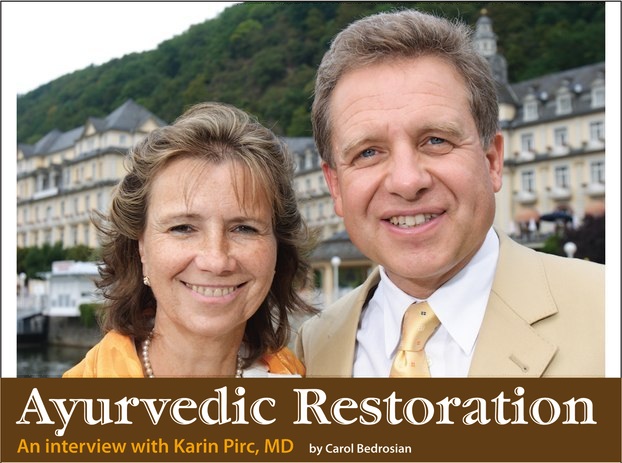
Lothar and Dr. Karin Pirc, Ayurvedic clinic directors, in front of the famous Maharishi Ayurveda Clinic in Bad Ems, Germany. Situated along the scenic Rhine River, home to many historic castles and fortresses, the clinic occupies the former German imperial palace of King Wilhelm II. Bad means “bath” in German.

Ayurveda is one of the oldest known systems of medicine in the world. Practices that predate written records, handed down by word of mouth, are believed to have originated in the second millennium BC. Literally, the word ayurveda translates into “science of life,” offering not only a prescription for a healthy body, but also a life of wellness and balance. Ayurveda continues to be widely practiced in India, where, according to the National Institute of Health, nearly 80 percent of the population (approximately 900 million people) use it exclusively or combined with conventional (Western) medicine.1
Ayurveda stresses a balance of three elemental energies or doshas within each body — vata, pitta and kapha — and outlines specific measures of healthful living known to correct dosha imbalances that are the cause of disease and toxicity. Treatment programs are tailored to each individual’s constitution and include a thorough Ayurvedic assessment, dietary and herbal remedies, detoxification procedures, specific recommendation for yoga/exercise and meditation. Patients must be active participants in their healing because many Ayurvedic treatments may require changes in diet, lifestyle and habits to restore balance.
Panchakarma, meaning “five actions,” is an Ayurvedic therapy that purifies the body by cleansing its deep tissues of toxins and opens subtle energy channels to increased life energy, health and immunity. A full treatment includes at least five different procedures over a period of several days or more, usually in a retreat or clinic setting. In countries where citizens enjoy more vacation time, panchakarma retreats are popular destinations allowing people to use their vacation time to de-stress, detox and rejuvenate on a regular basis.
Without the extended stay, individual panchakarma treatments can also provide relief from ailments and reactivate the body’s own self-healing and self-repair mechanisms. The images most popularly associated with Ayurveda — abhyanga (the two-person synchronized oil massage) and shirodhara (the steady stream of warm oil poured over the forehead) — lend a luxurious and exotic air to a medical system that is anything but mysterious. Thoroughly grounded in practical knowledge, Ayurveda provides a complete system of natural healing, disease prevention and enhancement of immunity for the human body regardless of race or location.
Nestled amidst 215 acres in the quintessential New England countryside, the Maharishi Ayurveda Health Center Lancaster in Lancaster, Massachusetts opened its doors in 1985 when few people in this country had even heard of Ayurveda. Established as the first Maharishi Ayurveda clinic in the West, for years it was widely regarded as a health spa for celebrities, presumably attracted to the glamour of the extraordinary healing treatments imported from India via famed Beatles guru Maharishi Mahesh Yogi, founder of the Transcendental Meditation program. As familiarity with alternative medicine grew over the next two decades, more people began seeking out the benefits of Ayurveda themselves, peering past its exotic aura to discover a complete and natural healing system of medicine noted for its success with chronic conditions.
Despite this increased interest, the Lancaster center eventually struggled to generate the resources required to update its facility. Enter Lothar Pirc, managing director, and Karin Pirc, MD, medical director of the famous Maharishi Ayurveda Health Center Bad Ems in Bad Ems, Germany. Founded in 1992, the center is one of the leading Ayurveda institutions in Europe. Dr. Pirc was the first European to receive the Indian Global Hakim Ajmal Khan Award of “Best Ayurvedic Physician 2006” for outstanding achievements in the field of Ayurveda.
Karin recalls, “Lothar was invited to consider taking over the management of the center in early 2009. It had been quite a famous place to do panchakarma, so we made trips and spent time looking over every detail of the property and interviewing all the employees. We were inspired by its beauty and the profound quality of the healing environment there. This opportunity revived an earlier interest of ours to begin developing clinics around the word, which was on hold while establishing our clinic in Bad Ems and raising our family. We became excited that the Lancaster center could be restored as a model facility for new centers around the world, so we finalized everything in May.”
When I visited the Lancaster center last fall to meet the new directors and sample Ayurvedic treatments there, it was obvious the Pircs had wasted no time in their restoration. A gentle aura of well-being permeates the beautiful acres of forests, meadows and lawns, carried indoors where every nuance of design and function gracefully emanates healing intention. During the visit no detail of my comfort was overlooked, culminating in the blissful three hours of purification during the warm, aromatic oil treatments of abhyanga and shirodhara. The Pircs were due to return to Germany the following day so I scheduled a phone interview with Dr. Pirc for a later date and floated home luxuriously relaxed and rejuvenated after my treatment.
One of the most experienced Ayurvedic physicians in the western world, Dr. Pirc opened the first Ayurvedic clinic in Germany in 1986 and has treated more than 20,000 patients from around the world. She is an MD with a Ph.D. in psychology, has authored eight books on Ayurveda and now serves as the medical advisor in Lancaster, while maintaining her practice as medical director in Bad Ems. Dr. Pirc engages Ayurveda with a systematic thoroughness that reveals both its practical, cost-effective simplicity for daily health maintenance and its effectiveness as a comprehensive natural medical system that is free from harmful side effects.

Carol Bedrosian: How did you come to be involved in Ayurveda?

Karin Pirc: I had the idea when I was a small girl that I wanted to help people with their body and their mind. So that was the first thing. I was very sick when I was a girl and at 19 years of age I started Transcendental Meditation. Gradually the whole disease went away so I was very interested in meditation and thought the spiritual dimension should also be included if you treat people. I studied psychology first at the university, and then I still had time, so I studied medicine.
When I was 33 or 34 I heard about Ayurveda, though I hardly knew what it was. A seminar for doctors was being offered in the Netherlands and I was in a situation where I thought I could try something new, so I went. After some days of training, I thought, “Wow this is exactly it.” I always had the feeling there should be something like this in medicine but maybe it will come in 2050, very far away.
The training was very systematic so I went home with all I had learned in those 4 weeks and started incorporating the new approaches with my patients. I was very lucky to have a place to start right away. I could give a lecture to about 800 people at that time and it went out right from the beginning and spread.
For about half a year I remember I would say to myself, “I don’t understand it. Everything is so easy.” I remember there was a lady who had functional heart problems, and they couldn’t treat it even with modern medicine. She was there in the clinic for 10 days and it was gone forever. Normally you have to prescribe strong heart drugs for these diseases. So then you sit there as a doctor and say, “What is this?”

Carol Bedrosian: So what is it?

Karin Pirc: How can it work? After the 6 months I was absolutely sure I would stick with it because of seeing these miracles everyday. In the next few years I did more doctor trainings to go deeper into the knowledge. It’s really great how much help you can give to people to really recover and understand what their body and mind are for and how to use them in a happy and healthy way.

Carol Bedrosian: Are you strictly doing Ayurvedic treatments now in your own practice?

Karin Pirc: Yes, because if you want to do something really, really good then you have to stick to it. And Ayurveda is so comprehensive. We have herbal preparations, we have rejuvenation, we have meditation, we have yoga, we have the purification treatments, and people can do the beneficial self-massage at home and breathing exercises. All these things are included in Ayurveda and I still don’t know everything. It’s a lifelong study and experience and I think it’s good if you concentrate on just one holistic health care system.

Carol Bedrosian: Can you tell me a little bit about your clinic in Germany?

Karin Pirc: The Maharishi Ayurveda Health Center in Bad Ems is very well known and patients come from all over Europe to be treated here. We are not a hospital, but we have the capacity to treat and accommodate about 40-50 patients at a time. They live in the hotel area and they can walk right over to the treatment area in their gowns. It’s very cozy for them. We have a large Ayurvedic treatment area and doctor consultation rooms, a yoga room, a meditation room and two or three lecture rooms. We give lectures every evening so guests can learn about their body, their mind and about Ayurveda so they are motivated when they go home to change some things in their lives.

Carol Bedrosian: What makes your clinic so successful?

Karin Pirc: I think it’s the successful treatments that are most important and also the orderly, structured and friendly way in which all the employees treat the patients. We are always improving our clinic. Just like in the United States, people have to pay for this themselves. It’s quite expensive because with Ayurveda you basically need two employees for every patient. So for 40 patients we have 80 employees; it’s not a cheap thing.

Carol Bedrosian: It’s very labor intensive.

Karin Pirc: It’s not only the treatments, but also what the patients don’t see in preparing things. Everything is freshly prepared — the herbs, the medicated oils and pastes — all these things sum up to a large labor cost. Sheets and the towels have to be replaced every six months because they are worn out by all the washing from the oils. The most important thing is the transformation and deep rejuvenation a person feels from the treatments.
The Ayurvedic purification treatment basically is ten days. You start with a gentle internal cleansing, and for that you need at least 3-5 days. You can take more but that’s the smallest time possible to start. Then after that there’s all these wonderful massages and detoxifying procedures. The ten-day treatment is a systematic way of loosening toxins, bringing it to the eliminative systems like sweating, the kidneys, the intestines and purifying all the organs. Once the impurities go out of the body, a person feels much better after that. There is just no chance you will go out of here and not feel better because you feel better when you are pure. It’s very easy.

Carol Bedrosian: Do people stay longer than ten days?

Karen Pirc: For people who are just tired and overworked and need some purification and refreshment, ten days makes a big difference in their wellbeing. If you are seeking more profound balance or have a chronic condition, 14 days or more is appropriate. After the in-residence program, the doctor will make personalized recommendations to use at home including herbs, exercise, diet and daily routine.

Carol Bedrosian: How is Ayurvedic health care perceived in Germany? Is it very popular?

Karin Pirc: It is quite popular. I would think that at least most people in Germany have heard the word, but we are a smaller country and when we first started with Ayurveda, nobody knew it. Now many hotels offer the wellness part of Ayurveda — not with the sophisticated quality that we offer — but it is quite well known. When you go to a sauna, many offer Ayurveda massage. It doesn’t really have much to do with Ayurveda, but at least they use the word!

Carol Bedrosian: Overall, how is the healthcare in Germany different than it is here in America?

Karin Pirc: We’re all forced to have health insurance in Germany, which is quite expensive. It can be a state run or private one, but you are forced to do it and it costs you many hundred euros per month. It is really a big part of your income. For that you get nearly everything free. Free means you pay for a recipe [prescription] just 10 euros.
But basically what you get is modern medicine only. You are forced to pay hundreds of euros a month and you are not allowed to decide what you get for that. There are three private insurances that pay for Ayurveda but the additional monthly premium you have to pay is much higher so I’m not sure if that’s a good idea to take it or not. So it’s basically like the US and people have to pay for Ayurvedic medicine from their own pocket, including panchakarma and other treatments that are expensive because of the labor and preparation involved.
But there are many things that anyone can afford. Sometimes just the right preparation can give you back all the energy, vitamins and minerals you need. For example, one patient who did not have much money, I was so glad about the success with his remedy I called my husband to tell him! He had hypertension, depression, diabetes, blindness from diabetes, and he hardly felt his feet anymore due to the diabetes. His improvements were so dramatic that he was able to reduce many of the modern medicines he was taking that may have been contributing to his problems.
And that’s what you see with Ayurveda. It was not expensive for this man so it was really worth it. For any of the major diseases, if people knew what great things could occur, they would try it — get their diagnosis and take the preparations. Normally, you’ll feel the first improvements quite quickly — after 3, 4, 5 weeks — and eventually the symptoms will reduce until they are gone. And that’s what we want. This other goal of modern medicine to just suppress symptoms for the rest of your life and tell people it is a chronic disease that cannot be cured is, fortunately, not true if you treat with Ayurveda.

Carol Bedrosian: I thought Germany was overall more progressive and holistic with their healthcare.

Karin Pirc: Yes, I think so. But all the pharmaceutical industries have tons of money and they go to all the politicians, so they have everything. They have the money to do the studies. The studies today are so expensive. A little study with 30 or 60 people will cost you millions and who can afford it? Nearly all the studies that are done here are pharmaceutical-sponsored. So in that case the US people are better off.

Carol Bedrosian: Why is that?

Karin Pirc: Because the NIH pays for studies in the US. I know they have paid about thirty million dollars for studies on the effects of TM [Transcendental Meditation] on high blood pressure and reduction of arthrosclerosis. In that part they are freer to go in a more holistic angle to see if there’s anything healthy we can give to our people to reduce all these modern problems.

Carol Bedrosian: Do these studies focus more on TM rather then other Ayurvedic treatments?

Karin Pirc: These big studies, yes, but we have some other Ayurvedic studies. A study was done in the US with panchakarma patients showing that approximately 50% of herbicides and pesticides that are stored in the fat tissues were reduced by up to 50% in 12 days. And that’s what the patients feel — this lightness and easiness in the body when they do the treatments. When all this mud goes out, you feel it. It’s not just something theoretical. That’s why I say it’s not possible for you to come out being less healthy than before you went in for treatment.

DR. KARIN PIRC’S SIMPLE AYURVEDIC DIET TIPS

Drink hot filtered water. Boil your water for 10 to 20 minutes in the morning and store it in a thermos so it’s available throughout the day. This hot water goes more quickly through your cells walls than cold water and the purification is deeper. Drink this as hot or as warm as it is convenient for you. In a week or two, you will start to feel more lightness in your body. It also takes the edge off the feeling of having to eat a little chocolate here or a little bread there so you can more easily stick to three meals a day and not eat things in between. You can add some fresh ginger slices in case you feel extremely heavy and congested, which makes it more purifying.

Eat large meals earlier in the day. Eat as early as possible, not later then 6:00pm. Avoid heavy-to-digest foods like meat, fish or cheese in the evening. Keep it light, like soup, grains, cooked vegetables, noodles, fresh tomato sauce, etc.

Eliminate between meal eating. Drink hot water instead. It may be boring, but it works!

Liquid fast one day per week. If you want to reduce weight and your amount of toxins, take only liquid food one day a week, no alcohol. You can have fresh juice, fresh soup from vegetables or grains. Take this 3, 5, 7 times a day — you don’t have to be hungry — and have the hot water in between. The next day you will feel light, the way you should be. It’s very quick, but, of course, it needs a little discipline.
When you first begin and especially if you have lots of toxins stored in your cells or you have a diet where you eat meat two times a day and drink lots of cola or alcohol, you may get a headache after six hours or so. This is a good sign that the toxins from your cells are circulating in the blood and can be flushed out. When you repeat this fasting day for several weeks it gets easier and easier since the body doesn’t need to digest so much during this day and it can release all the rubbish from the cells. If you drink the hot water you will see in the first week the headache comes on after 6 hours or so, the next week after 8 hours and then 8 hours again until gradually it stops. The hot water is very important. It liquefies waste and toxins so they are easier to get rid of. The heat of the hot water increases metabolism, which increases purification. I could talk for 3 hours about hot water.

Avoid iced drinks. If you go to countries where there is a warm climate and the people have been there for centuries, nobody drinks cool things. They all drink warm things like teas. When it’s warm outside the body metabolism gets reduced because the body has to cool down as a natural reflex. So it starts with sweating. All the heat goes outside so you have less power to digest. You will also see in these countries they have many hot spices for their food, which they need to gain more digestive power.
But the American people didn’t bring the culture to this country to have warm teas. Now they want to reduce the outer heat with cold drinks that cool you down perfectly in the first moments when you drink, but it also cools down your digestive system so you cannot digest so well. I believe that a big portion of the overweight problem in the US is from people drinking ice drinks. Increasing the metabolism power inside the intestines with hot drinks helps increase weight reduction. It’s very simple and very cheap; you just have to do it.

1. National Institute of Health http://nccam.nih.gov/health/ayurveda/introduction.htm

Interviewer Carol Bedrosian is the publisher and editor of Spirit of Change with 25 years of satisfied experience using all natural healthcare. She can be reached at carol@spiritofchange.org or 508-278-9640, ext 3.

Learn more about Maharishi Ayurveda Health Center Lancaster at http://www.lancasterhealth.com or call 877-890-8600.
Conscious TV: John Hagelin – The Core of Nature

July 30, 2010

Science – Dr John Hagelin – ‘The Core Of Nature’ – Interview by Iain McNay (watch this programme) Author of “Manual for a Perfect Government“, John Hagelin, Ph.D. is a quantum physicist and leading proponent of peace. Stood for President of the US in 1990 and received over 2 million votes. Conducted pioneering research at CERN (the European Centre for Particle Physics) and SLAC (the Stanford Linear Accelerator Centre). His scientific contributions in the fields of electroweak unification, grand unification, super-symmetry and cosmology include some of the most cited references in the physical sciences. He is also responsible for the development of a highly successful Grand Unified Field Theory based on the Superstring. Dr Hagelin is therefore at the pinnacle of achievement among the elite cadre of physicists who have fulfilled Einstein’s dream of a “theory of everything” through their mathematical formulation of the Unified Field, the most advanced scientific knowledge of our time. Dr Hagelin is currently Director of the Institute of Science, Technology and Public Policy, a leading science and technology think tank, and International Director of the Global Union of Scientists for Peace, an organization of leading scientists throughout the world dedicated to ending nuclear proliferation and establishing lasting world peace. John talks about his life, his work and the benefits of meditation. Visit Dr John Hagelin’s website: http://www.hagelin.org. Watch John Hagelin on Conscious TV.

Other videos worth watching: John Hagelin, Ph.D., Speaks on the Nature of Consciousness and the Universe | Dr. John Hagelin: Look Within to Understand the Universe | John Hagelin — “Only Higher Consciousness Can Transform Our World” — Beyond Awakening Blog.

Meditation Techniques Have Different Effects

July 21, 2010

Meditation Techniques Have Different Effects

By Rick Nauert PhD Senior News Editor
Reviewed by John M. Grohol, Psy.D. on July 21, 2010

Meditation is an alternative medicine modality prescribed by physicians to help individuals relieve stress and, at times, reduce pain.

However, as Western medicine turns to meditation, doctors are learning that meditation incorporates a variety of techniques including methods that originated from Buddhist, Chinese, and Vedic traditions.

And, just as the techniques vary in delivery, the clinical effects of meditation may also have a variety of outcomes.

A new paper published in Consciousness and Cognition discusses three categories to organize and better understand meditation:

Focused attention—concentrating on an object or emotion;
Open monitoring—being mindful of one’s breath or thoughts;
Automatic self-transcending—meditations that transcend their own activity—a new category introduced by the authors.

Each category was assigned electroencephalogram bands, based on reported brain patterns during mental tasks. Meditations were then categorized based on their reported EEG.

“The idea is that meditation is, in a sense, a ‘cognitive task,’ and EEG frequencies are known for different tasks,” said Fred Travis, Ph.D., co-author, and director of the Center for Brain, Consciousness, and Cognition at Maharishi University of Management.

Focused attention, characterized by beta/gamma activity, included meditations from Tibetan Buddhist (loving kindness and compassion), Buddhist (Zen and Diamond Way), and Chinese (Qigong) traditions.
Open monitoring, characterized by theta activity, included meditations from Buddhist (Mindfulness, and ZaZen), Chinese (Qigong), and Vedic (Sahaja Yoga) traditions.

Automatic self-transcending, characterized by alpha1 activity, included meditations from Vedic (Transcendental Meditation) and Chinese (Qigong) traditions.

Between categories, the included meditations differed in focus, subject/object relation, and procedures. These findings shed light on the common mistake of averaging meditations together to determine mechanisms or clinical effects.

“Meditations differ in both their ingredients and their effects, just as medicines do. Lumping them all together as “essentially the same” is simply a mistake,” said Jonathan Shear, Ph.D., co-author, professor of philosophy at Virginia Commonwealth University in Richmond, and the author of several books and publications on meditation.

“Explicit differences between meditation techniques need to be respected when researching physiological patterns or clinical outcomes of meditation practices,” said Dr. Travis.

“If they are averaged together, then the resulting phenomenological, physiological, and clinical profiles cannot be meaningfully interpreted.”

Source: Maharishi University of Management

Are all meditation techniques the same?

July 20, 2010

Public release date: 20-Jul-2010 Maharishi University of Management

Are all meditation techniques the same?

Different practices often produce different results

As doctors increasingly prescribe meditation to patients for stress-related disorders, scientists are gaining a better understanding of how different techniques from Buddhist, Chinese, and Vedic traditions produce different results.

A new paper published in Consciousness and Cognition discusses three categories to organize and better understand meditation:

  1. Focused attention—concentrating on an object or emotion;
  2. Open monitoring—being mindful of one’s breath or thoughts;
  3. Automatic self-transcending—meditations that transcend their own activity—a new category introduced by the authors.

Each category was assigned EEG bands, based on reported brain patterns during mental tasks, and meditations were categorized based on their reported EEG.

“The idea is that meditation is, in a sense, a ‘cognitive task,’ and EEG frequencies are known for different tasks,” said Fred Travis, Ph.D., co-author, and Director of the Center for Brain, Consciousness, and Cognition at Maharishi University of Management.

Focused attention, characterized by beta/gamma activity, included meditations from Tibetan Buddhist (loving kindness and compassion), Buddhist (Zen and Diamond Way), and Chinese (Qigong) traditions.

Open monitoring, characterized by theta activity, included meditations from Buddhist (Mindfulness, and ZaZen), Chinese (Qigong), and Vedic (Sahaja Yoga) traditions.

Automatic self-transcending, characterized by alpha1 activity, included meditations from Vedic (Transcendental Meditation) and Chinese (Qigong) traditions.

Between categories, the included meditations differed in focus, subject/object relation, and procedures. These findings shed light on the common mistake of averaging meditations together to determine mechanisms or clinical effects.

“Meditations differ in both their ingredients and their effects, just as medicines do. Lumping them all together as “essentially the same” is simply a mistake,” said Jonathan Shear, Ph.D., co-author, professor of philosophy at Virginia Commonwealth University in Richmond, and the author of several books and publications on meditation.

“Explicit differences between meditation techniques need to be respected when researching physiological patterns or clinical outcomes of meditation practices,” said Dr. Travis. “If they are averaged together, then the resulting phenomenological, physiological, and clinical profiles cannot be meaningfully interpreted.”


Print | E-mail | Share Share

(more…)

ABC News/Nightline: Transcendental Meditation in Vedic City, Iowa

July 6, 2010

Transcendental Meditation Thrives in Iowa

Adherents of Transcendental Meditation Have Called Hawkeye State Home Since ’70s

By JOHN BERMAN and MAGGIE BURBANK

July 5, 2010 —

Travel to an Iowa cornfield to find an entire town that meditates en masse. More Photos

When you think of Iowa, you think of cornfields, you think of caucuses, you think of old-fashioned country-living.

Chances are, you don’t think of meditation and communal living.

Welcome to Maharishi Vedic City, Iowa — the only city in the country built on the tenets of transcendental meditation, for meditators, by meditators.

Meg and Erik Vigmostad moved here from St. Louis in 1982.

“We wanted to come to a meditating community,” said Meg Vigmostad. “We had two children at the time, one of them was an infant, and we felt like it was the best place to bring up our children.”

Watch the full story tonight on “Nightline” at 11:35 p.m. ET

Vigmostad acknowledged that the couple’s families thought they were “crazy” for making the move. Crazy, because those words, “transcendental meditation,” sound, well, different. Many people first heard of transcendental meditation, or TM, in the 1960s, when the Beatles started following Maharishi Mahesh Yogi, the official founder of TM.

“Transcendental meditation is a simple technique practiced for about 15-20 minutes sitting comfortably in a chair with the eyes closed,” said Bob Roth, national director of the TM program. “It allows the body to get a profound state of rest while the mind just settles down and experiences a state of inner wakefulness, inner calm, inner coherence.”

The followers of Mahesh Yogi — mostly from East and West Coast universities — moved to Iowa en masse in 1974 to set up their own college, the Maharishi University of Management. The group chose Iowa because that is where they could find the land.

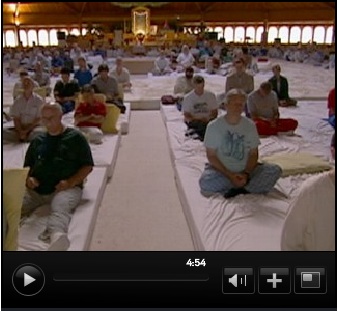
Now the settlement features two huge domes, one for men and one for women, with residents streaming in to meditate together twice a day.

But at the university and in the city, the commitment to Vedic principles of natural law and balance, derived from ancient Sanskrit texts, goes far beyond meditation. The community has banned the sale of nonorganic food within its boundaries. And that’s not all.

“The primary characteristics of Vedic architecture, the most obvious one, is that ideally, buildings face east, the direction of the rising sun,” said Jon Lipman, the country’s leading Vedic architect.

‘Greater Happiness’

Lipman says the buildings at the university and most new houses in town are constructed in line with ancient precepts.

“Just like the organs in the human body, there is a right place for different kinds of functions within a building,” Lipman said.

“And so, a kitchen is typically in one location. A living room in a house is typically in another location.”

Every Vedic building has a silent core known as a Bramastan, which is lit by a skylight and is never walked on. Lipman claims miraculous effects.

“The results are that, families find that their lives are improved, that there’s greater family harmony, that there is greater financial success, there’s greater happiness,” said Lipman. “There are many many cases where members of a family had disharmony between them, and it dissolved when they moved into a Vedic home. There are many cases where even such things as chronic diseases were abated by moving into a Vedic home.”

Lipman said “it’s a real challenge” to be poor, unhappy or unhealthy if you live in a Vedic building.

The Vigmostads live in a Vedic house, and seem like happy customers.

“It feels harmonious, it feels orderly, there’s a lot of silence here that was definitely not in our other house that we owned,” said Meg Vigmostad.

The talk of order and inner peace might sound unbelievable. But it is also the work of Vedic City to make it all … believable. Fred Travis, director of a university facility called the Center for Brain Consciousness and Cognition, demonstrated an EEG monitor of neurological electrical activity that he said shows that TM makes the brain more organized.

“What this is measuring is the electrical activity of the brain,” Travis explained as a member of the community hooked up to the machine sat and meditated.

“You see this one going up and down?” Travis said, pointed to a gauge. “Look at the one next to it. It goes up and down in a similar way. This is called coherence. When the similarity of two signatures are very close, it suggests those two parts of the brain are working together.

Neurologist Gary Kaplan, a proponent of TM, said such “coherence” will bring happiness, success — even world peace.

“What we notice is that this electrical activity becomes more harmonious or coherent between left and right hemispheres,” Kaplan said. “There have been studies that have documented that the TM technique, when practiced in large groups, seems to have some effect on society in general, whether it’s in war-torn areas where people are sitting to meditate together, or in high-crime areas that the trends reverse when you have larger groups meditating together.”

David Lynch and TM

It is a lot to digest — but then you don’t really have to. The TM followers insist they are not a cult. They all have normal jobs, for the middle of Iowa, and they are not out to recruit you. They just want you to know the option is there.

Famed filmmaker David Lynch spends a lot of time in Vedic City. He started the David Lynch Foundation, which, in the last four years, has provided scholarships for over 100,000 kids to learn to meditate for free in schools across the country.

“It’s not a religion. It’s not against any religion, it’s not mumbo-jumbo. It truly does transform life,” Lynch told ABC News. “Kids come to school and they meditate together for 15 minutes in the morning. And before they go home they meditate for 15 minutes. A lot of them come from, you know, bad situations, and so this gives them this thing you know, at the beginning and the end of the day, the rest of the time you just watch the violence stop. Watch relationships improve. Watch happiness in the hallways, in the classroom, watch creativity flow more and more, watch that heavy weight that we are living under gently lift away.”

“Nightline” was told there wasn’t enough time to properly learn transcendental meditation on a short trip to Vedic City. But to get a feeling of the Vedic way of life, we did visit the Ayurveda Health Spa in Vedic City — the leading spa of its kind in the country. Ayurveda is a system of health and healing involving food and behavior that originated in India thousands of years ago.

“We take your pulse, we put three fingers on the right hand,” explained Mark Toomey, an Ayurvedic health expert at the spa. “And it’s what I would say is like plugging into the inner intelligence of the body.”

Toomey said he can learn a lot from feeling a person’s pulse. He demonstrated on our correspondent.

“It’s a strong pulse,” Toomey said. “That means that, good expression of intelligence. It’s clear. Your pulse has a little bit of tension there, so maybe you’re working a little too hard, too many deadlines.”

Next up was the Shirodhara treatment.

“So what we’re going to be doing is pouring this oil for about 20 minutes on your forehead, in a continuous stream,” said Toomey. “Your job is just to relax and enjoy.”

And what’s so wrong with that? In Vedic City, they have made that their way of life … in the middle of Iowa.

“We really have all we need here,” said Meg Vigmostad. “You can go to a city anytime. But this is sort of a haven, you know? And it’s a place of comfort, and community.”

Copyright © 2010 ABC News Internet Ventures

This edited version finally aired: http://bit.ly/cDxWqj and was posted earlier this year: http://wp.me/pD0BA-Gp

US Government National Health Center Highlights TM Study on Stressed College Students

May 14, 2010

Transcendental Meditation Helps Young Adults Cope With Stress

A recent study found that Transcendental Meditation (TM) helped college students decrease psychological distress and increase coping ability. For a group of students at high risk for developing hypertension, these changes also were associated with decreases in blood pressure. This could be good news for the many students experiencing academic, financial, and social pressures that can lead to psychological distress—especially in light of evidence that college-age people with even slightly elevated blood pressure are three times more likely to develop hypertension within 30 years.

Funded in part by NCCAM, researchers from Maharishi University of Management and American University studied 298 students from American University and other schools in the Washington, D.C., area. The researchers randomly assigned students to a TM group or a control (wait-list) group. They also created a high-risk subgroup, based on blood pressure readings, family history, and weight. The TM group received a seven-step course in TM techniques, with invitations to attend refresher meetings, and kept track of how often they practiced TM. At the beginning of the study and after 3 months, researchers tested all participants for blood pressure and psychological measures. The researchers noted that 30 percent of the participants dropped out before the end of the study.

Blood pressure decreased in the TM group and increased in the control group, but the differences were not significant overall (TM-control blood pressure differences were significant within the high-risk subgroup). However, compared with controls, the TM group had significant improvement in total psychological distress, anxiety, depression, anger/hostility, and coping ability. Changes in psychological distress and coping paralleled changes in blood pressure.

According to the researchers, these findings suggest that young adults at risk of developing hypertension may be able to reduce that risk by practicing TM. The researchers recommend that future studies of TM in college students evaluate long-term effects on blood pressure and psychological distress.

Reference

URL: http://nccam.nih.gov/research/results/spotlight/051410.htm

This page last modified May 13, 2010.

Twitter NCCAM

Transcendental Meditation Helps Young Adults Cope With Stress: http://go.usa.gov/ihN

Maharishi describes the nature of inner life: bondage and liberation, and gaining bliss consciousness through Transcendental Meditation

May 9, 2010

Maharishi at Lake Louise

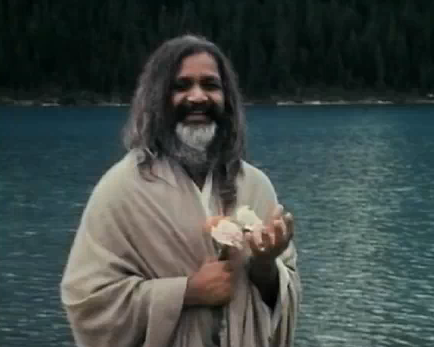
The Canadian Broadcasting Corporation produced this beautiful documentary on Maharishi Mahesh Yogi, founder of the Transcendental Meditation technique, during his visit to Canada’s premier hotel Chateau Lake Louise,  June 10-14, 1968, the course location for Canadian meditators. I was very lucky to have been on that course and met Maharishi for the first time. All of the course participants lined up to present Maharishi with flowers for the CBC to film. It was used to open and close that documentary profile, which was made for the CBC program series called Telescope.

This CBC documentary remains one of the best films ever made on Maharishi. Filmed inside the hotel’s main lecture hall and outside with the backdrop of the majestic Canadian Rocky Mountains, it respectfully portrays Maharishi as a great spiritual teacher. They filmed him walking in front of the glacier lake, the image of which he used to describe the nature of inner life, bondage and liberation, and contacting and integrating bliss consciousness into daily life through the regular practice of Transcendental Meditation.

Posted here is an edited version of that documentary, minus the opening introduction, segues, and commercials, which was aired on Canadian national television during the Fall of 1968. Here is a partial transcription of that segment of the video. To view the whole video click on the title, Maharishi at Lake Louise. It can also be viewed on the Maharishi Channel on You Tube: Transcendental Meditation – Maharishi Mahesh Yogi at Lake Louise, Canada, 1968. Also, the Transcendental Meditation blog has a well-written comprehensive, historical, contextual description about this video by Bob Roth: Maharishi: A rare glimpse into the message of meditation from 40 years ago. It’s also embed here for you to enjoy.

The depth of the lake, and the ripples, and the beautiful reflection of the glacier, reminds me of the story of inner life. The mind is deep like a lake. The ripples on the surface represent the conscious mind, the activity of the mind on the surface. And the whole depth of the lake is silent. And that is the subconscious mind, which is not used by the wave. But if, the wave could deepen, and incorporate more silent levels of the water, the waves could become the waves of the ocean, the mighty waves.

This is what happens in Transcendental Meditation. The surface activity of the conscious mind deepens and incorporates within its fold the depth of the subconscious. And with practice, nothing remains subconscious. The whole subconscious becomes conscious, and a man starts using full potential of the mind.

And the reflection of the glacier on the water is like the impression of the objects that the mind perceives. And as long as the mind is not capable of maintaining its essential nature, which is bliss consciousness, so long the mind gets imprinted by the perceptions of the objects. And this is called the bondage of the mind. The mind loses bliss consciousness and gains the joy of the reflections of the world, the joy of the relative order, losing the bliss of the absolute eternal Being.

When the mind is not capable of maintaining its essential nature, bliss consciousness, and is overshadowed by the reflections of the object of perception, then only the object remains, and the subject, as if, becomes annihilated. This annihilation of the subjective nature within is a great loss. It’s a loss of eternal bliss at the cost of temporary joys. Such a life where the value of the matter dominates is called material life, and the spirit gets annihilated.

But, when through the practice of Transcendental Meditation, the mind goes deep within to the source of thought, transcends the thought, and gains bliss consciousness, and is capable of maintaining that even when it comes out into the worldly experience of objective nature, then it is called spiritual life—that the spirit is not capable of being overshadowed anymore by the objective experience. And this is spiritual life. This is life in eternal liberation. And without this, life is in bondage. A great loss. As if loss of a billion pounds, and gain of a million. Loss of eternal bliss consciousness and gain of a worldly fleeting joy.

The vision, the vision of the lake, brings about a great teaching of spiritual life. …

New Post: Watch the 1968 film of Maharishi at Lake Louise.

On September 30, 2014 I had posted how I learned #TMmeditation 47 years ago today. In there I share more information about the making of the CBC Telescope film, The Guru, of Maharishi at Lake Louise. Richard Day shared a story he had heard many years later about the director of the film who told Maharishi that he wanted to film him saying something that would encapsulate all his teachings. Maharishi said, “I’ll walk by the lake, you walk with me, and I’ll tell you everything about spiritual development.” He did it in one take!

EEG Demonstration of the Enlightened Brain

May 8, 2010

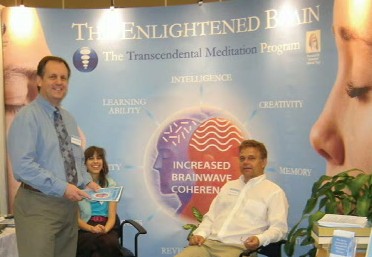
Michael Beresford, Sara Hea and Rich Van Shaik present the TM Program

Transcendental Meditation Brainwave Coherence Demo

Michael Beresford, brain researcher, businessman, and teacher of the Transcendental Meditation Program, demonstrates how TM increases EEG brainwave coherence and improves mental performance.

Radish: MLG seeks healing through light and gems

May 6, 2010

Apr 28, 2010 10:18AM

MLG seeks healing through light and gems

By Linda Egenes

When Jim Fairchild, a 68-year-old college professor, signed up for a session of Maharishi Light Therapy with Gems (MLG), little did he know that this holistic new therapy would provide relief from a serious injury.

“Ever since a car ran over me when I was 3 years old, I’ve lived with constant pain and pressure in the back of my neck,” he says. “As a result, I’ve been on a lifelong quest for relief — consulting legions of chiropractors, massage therapists, and others. But nothing worked.”

At first, Fairchild found that light and gem therapy treatments simply made him feel more relaxed.

Then, to his surprise, he felt a profound shift in his level of pain. “I came out of a session feeling almost no discomfort in the back of my neck,” he says. “I quietly waited for the inevitable. But the pain didn’t return. My neck isn’t perfect, but the difference is profound. The amazing thing is that during the session I didn’t feel anything extraordinary in my physiology. Yet somehow relief came to me, without my even asking.”

The oldest and most refined members of the mineral kingdom, gems have long been known for their healing qualities. For thousands of years, the Ayurvedic tradition of India has employed gems for prolonging life span and promoting health, wealth, happiness, charisma and the fulfillment of desires. In fact, Ayurvedic texts describe mantras, gems and herbs as the three fundamental means to support the development of higher states of consciousness and perfect health.

Today the healing power of gems is available in an affordable new treatment called Maharishi Light Therapy with Gems (MLG), offered at The Raj Maharishi Ayurveda Health Spa in Fairfield, Iowa. In this treatment, the profound orderliness of 13 gemstones, each with their own unique crystalline structures, is made available to the mind and body. This occurs by using special “light beamers” which project soft light through the gems.

Dr. Keith Wegman, an MLG practioner at The Raj, explains, “The light frequencies act as a carrier for the orderly structure of the gems. They resonate with subtle frequencies of our physiology and trigger profound self-healing and self-repair.”

During the past year, over 2,000 treatments given at The Raj have provided strong evidence of the long-term benefits of this approach.

“Individuals have reported relief from chronic disorders, such as decreased anxiety and decreased joint, muscle, and bone problems, as well as improved emotional stability, better sleep and expanded self-development,” says Dr. Wegman. “Now a six-month research study is being conducted to quantify the long-term effects of the treatment.”

The results of MLG are different for each person. A woman from Montreal found relief from asthma, while Adile Esen from Turkey noticed her emotions were more stable.

“The feeling of nourishment and balance coupled with calmness and clarity have continued,” she says. “In addition to becoming more aware, open, and clear, I realize that even in very difficult situations that could have made me doubt and tremble, I have remained calm like the pearl at the bottom of the ocean.”

The equipment used in MLG treatments was developed over a period of 30 years by Dr. Yoachim Roller, a German gemologist, under the direct guidance of Maharishi Mahesh Yogi, who founded the Transcendental Meditation technique and Maharishi Ayurveda. Trained practitioners offer MLG exclusively at The Raj in Fairfield and in facilities around the world.

The Raj is the only place in North America to offer treatments using larger, more powerful instruments, affectionately called “Big Beamers.” The 13 Big Beamers contain 12 gems each, with a total of 145 gems to magnify the effect.

“The Big Beamers have a unique ability to transform any rigidity or obstruction to the flow of energy in the physiology,” Dr. Wegman says. “The transformation is more significant than with the regular beamers because the body is being submerged in profound coherence. The more powerful orderliness of the large beamers takes over any disorder, restoring balance in previously weak or compromised areas of functioning.”

Adds Dr. Wegman, “Gems are crystalline structures that are as old as our planet. Their inherent orderliness resonate with the inherent orderliness in the physiology, and that produces the profound results for mind and body that thousands of people have already experienced.”

For more information or to schedule Maharishi Light Therapy with Gems, contact The Raj Maharishi Ayurvedic Health Spa in Fairfield, Iowa, (800) 864-8714, extension 5300, or visit theraj.com/mlg/index.php.

MHN Interview with Jeffrey S. Abramson: Vedic Architecture Changes Way People Feel, Work

May 6, 2010

MHN Interview with Jeffrey S. Abramson: Vedic Architecture Changes Way People Feel, Work

Headline News, National, News, Today’s Headlines May 5, 2010

By Anuradha Kher, Online News Editor

The Harvard Business School/Harvard University Graduate School of Design recently presented a case study: “Design Creates Fortune: 2000 Tower Oaks Boulevard,” on the 200,000 square foot LEED Platinum and Fortune Creating Architectural/Vedic-designed office building co-developed by The Tower Companies and Lerner Enterprises of Rockville, Md.

The presenters challenged students to consider the fact that human capital costs were higher than energy costs, and, perhaps it made more business sense to focus on improving the efficiency and productivity of the employees by employing ideas like Vedic Architecture.

Jeffrey S. Abramson, Partner, The Tower Companies’ talks to MHN about why he believes Vedic Architecture is the wave of the future and how it can also change people’s lives by being implemented in multifamily buildings.

MHN: What is Vedic Architecture?

Abramson: Vedic architecture is architecture in accord with natural law. Natural laws are those governing intelligence found in nature, which uphold life in perfect order. It is electrons and magnetic fields and all those impulses of nature that uphold everything in nature. Everything that happens in nature happens by the functioning of natural law. This architecture connects individual life with cosmic life using the same intelligence that governs nature. These expressions like you see in Vedic architecture are expressions you find in almost all cultures, in all systems of architecture, since the Greeks, Romans and Egyptians.

MHN: What are the principles of Vedic architecture?

Abramson: There are about 100 principles that make up Vedic architecture. Orientation—states that the front entrance should face east; how the building is sited on the land—which is called Vastu; determining the center point or nucleus of building; water placement etc. Taken in isolation these principles don’t have much of an impact, but taken together, they create the ideal building.

We incorporated all the 100 principles in the office building. We didn’t try to fool Mother Nature.

MHN: Why is this form of architecture important?

Abramson: Buildings affect people. And if buildings can affect people, they can affect their behavior, their outcomes and their success. Buildings can elevate life and if you can figure out those architectural principles that can uphold the life of the occupant, make them more successful, brighter and smarter, it can be very useful. The built environment can enhance productivity of the company and collectively this is going to have huge ramifications on the health and economic development of the U.S. Reduce pollution; create new jobs and new technologies. It’s not an intellectual concept, its not like there’s a sign that says you are about to experience something. But people come in and say they feel peaceful and energized. It has nothing to do with style, it can be any style the architect chooses.

MHN: Where does Vedic architecture come from?

Abramson: It is about 5000 years old and is associated with India but in its absolute essence, where we are not talking about interpretation etc, these are really just principles found in nature. It could be like saying physics is Austrian or German because we associate Einstein with it. So in that sense, it transcends culture. It was however, enlivened, and somewhat maintained in India.

MHN: How many building that incorporate Vedic architecture exist today?

Abramson: There is 500 million dollars worth of Vedic construction around the world. There are some very small multifamily buildings that incorporate it as well but it so happens that the office one is the largest right now. The next goal for us is to incorporate it in multi-housing. In fact, we now have the opportunity to build about 2,500 apartments at Metro station. This is the direction in which real estate is moving.

MHN: Are there any additional costs involved?

Abramson: There is a small cost—about 2-3 percent more, which is about 10 cents or so per sq ft. It is a minimal cost to make a massive contribution.