maybe death
isn’t darkness, after all,
but so much light
wrapping itself around us–
From White Owl Flies Into And Out Of The Field by Mary Oliver
Jan 17, 2019: I received news this morning that Mary Oliver had passed. I was shocked. Strange how just two days ago I had posted and sent out one of her beautiful, wise poems, Sunrise.
Later tonight I checked and the internet was flooded with the news. A friend forwarded this email from Suzanne Lawlor: RIP Mary Oliver. I am very sorry to share this sad news about Mary Oliver, one of my favorite poets. This is what was sent out today. (I added the dates.)
Mary Oliver, beloved poet and bard of the natural world, died on January 17 at home in Hobe Sound, Florida. She was 83. (Born: Sept 10, 1935)
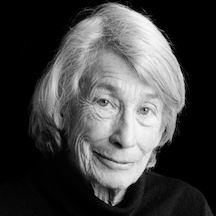
Mary Oliver (1935-2019)
Oliver published her first book, No Voyage, in London in 1963, at the age of twenty-eight. The author of more than 20 collections, she was cherished by readers, and was the recipient of numerous awards, including the 1984 Pulitzer Prize for American Primitive, and the 1992 National Book Award for New and Selected Poems, Volume One. She led workshops and held residencies at various colleges and universities, including Bennington College, where she held the Catharine Osgood Foster Chair for Distinguished Teaching until 2001. It was her work as an educator that encouraged her to write the guide to verse, A Poetry Handbook (1994), and she went on to publish many works of prose, including the New York Times bestselling essay collection, Upstream (2016). For her final work, Oliver created a personal lifetime collection, selecting poems from throughout her more than fifty-year career. Devotions was published by Penguin Press in 2017.
For me the door to the woods is the door to the temple.
Her poetry developed in close communion with the landscapes she knew best, the rivers and creeks of her native Ohio, and, after 1964, the ponds, beech forests, and coastline of her chosen hometown, Provincetown. She spent her final years in Florida, a relocation that brought with it the appearance of mangroves. “I could not be a poet without the natural world,” she wrote. “Someone else could. But not me. For me the door to the woods is the door to the temple.” In the words of the late Lucille Clifton, “She uses the natural world to illuminate the whole world.”
In her attention to the smallest of creatures, and the most fleeting of moments, Oliver’s work reveals the human experience at its most expansive and eternal.
In her attention to the smallest of creatures, and the most fleeting of moments, Oliver’s work reveals the human experience at its most expansive and eternal. She lived poetry as a faith and her singular, clear-eyed understanding of verse’s vitality of purpose began in childhood, and continued all her life. “For poems are not words, after all, but fires for the cold, ropes let down to the lost, something as necessary as bread in the pockets of the hungry.”
For poems are not words, after all, but fires for the cold, ropes let down to the lost, something as necessary as bread in the pockets of the hungry.
— Mary Oliver, “A Poetry Handbook”, p.136
When Death Comes
When death comes
like the hungry bear in autumn;
when death comes and takes all the bright coins from his purse
to buy me, and snaps the purse shut;
when death comes
like the measle-pox;
when death comes
like an iceberg between the shoulder blades,
I want to step through the door full of curiosity, wondering:
what is it going to be like, that cottage of darkness?
And therefore I look upon everything
as a brotherhood and a sisterhood,
and I look upon time as no more than an idea,
and I consider eternity as another possibility,
and I think of each life as a flower, as common
as a field daisy, and as singular,
and each name a comfortable music in the mouth,
tending, as all music does, toward silence,
and each body a lion of courage, and something
precious to the earth.
When it’s over, I want to say: all my life
I was a bride married to amazement.
I was the bridegroom, taking the world into my arms.
When it’s over, I don’t want to wonder
if I have made of my life something particular, and real.
I don’t want to find myself sighing and frightened,
or full of argument.
I don’t want to end up simply having visited this world.
###
In this poem, When Death Comes, Mary Oliver, who was seriously ill at the time, seemed to be contemplating her own mortality. Her perspectives on life and time were changing: “and I look upon time as no more than an idea, / and I consider eternity as another possibility,”. This reminds me what Maharishi said on the subject: “Time is a conception to measure eternity.”
I’ve posted a few of her astonishing poems: The Journey; Wild Geese; Swan; Praying; Varanasi; The Summer Day (“The Grasshopper”); At the Lake; One; White Owl Flies Into And Out Of The Field; Sunrise; The Loon; Blue Iris; When I Am Among The Trees; Lingering In Happiness; At Blackwater Pond; Don’t Hesitate; Mockingbirds; Messenger; Little Dog’s Rhapsody in the Night; Coming Home; Everything That Was Broken; Nothing Is Too Small Not To Be Wondered About (“The Cricket”); Mindful; Swimming, One Day in August; Red Bird Explains Himself; and When Death Comes, included here in her obituary posted on Jan 17, 2019.
On January 21, 2019, Here & Now‘s Robin Young talked with author Ruth Franklin about award-winning poet Mary Oliver’s legacy: Remembering The ‘Ecstatic Poet’ Mary Oliver, Who Wrote About The Natural World. Franklin wrote a profile of Oliver for The New Yorker (November 20, 2017): What Mary Oliver’s Critics Don’t Understand. Robin plays an excerpt of Oliver being interviewed by Krista Tippett: On Being, Mary Oliver Listening To The World. Mary told Krista: “I got saved by poetry, and I got saved by the beauty of the world.”
I transcribed part of their discussion in this footnote to her poem, Messenger, where she says that attention is the beginning of devotion.
On October 18, 2016, Fresh Air’s Maureen Coorigan gave a wonderful book review of the poet’s New York Times essay collection: Mary Oliver Issues A Full-Throated Spiritual Autobiography In ‘Upstream’.
Today, on the day of her passing, the 92nd Street Y posted their Oct 15, 2012 recording of Mary Oliver reading from her new poetry book, A Thousand Mornings, and some of her other well-known poems.
On January 22, 2019, The Paris Review published an In Memoriam from Billy Collins. He wrote about a time (“one evening in October 2012”) when he and Mary Oliver shared the stage for a poetry reading “at an immense performing arts center in Bethesda, Maryland.” What he remembers “best was the book signing that followed. … I couldn’t help noticing how emotional many of Mary’s readers became in her presence. They gushed about how much her poems meant to them, how her poems had comforted them in dire times, how they had been saved by her work.” See his revealing conclusion to When Mary Oliver Signed Books. (PDF)
Quotefancy published TOP 20 Mary Oliver Quotes from her poems. Famous Poets and Poems lists 87 of Mary Oliver’s poems.
Mary Oliver’s essential message for living a full life
Mary Oliver said: “To pay attention, this is our endless and proper work.” She elaborated it in this 3-line poem, Instructions for living a life: Pay attention. / Be astonished. / Tell about it. And did she ever! It’s how she lived her life, and told us all about it in the gift of her amazing poetry.
A Tribute to Mary Oliver
On September 23, 2019, 8 months and 5 days after her passing, thousands of fans came together at the 92nd Street Y in New York and online via livestream for A Tribute to Mary Oliver. Friends and fellow writers read from Mary’s works. It was recorded, then posted 6 months and 4 days later, on March 27, 2020.
Bill Reichblum, literary executor of the Mary Oliver Estate, spoke first (1:13); followed by May Oliver’s official biographer, Lindsay Whalen (7:00); welcomed with long applause, Secretary Hillary Rodham Clinton (12:36); Maria Shriver (18:11); Coleman Barks (28:04); Lisa Starr (33:05); Eve Ensler (50:30); John Waters (58:10); and Mary Oliver (1:04:43), reciting Wild Geese from that Oct 2012 recording at the 92nd Street Y. The event was sponsored by the 92nd Street Y, the Academy of American Poets, Penguin Press, and the Poetry Society of America.
An earlier tribute sponsored by WBUR CitySpace was posted May 6, 2019. A panel of poets whose works and lives have been impacted by Mary Oliver’s work read from her poetry and participated in a Q&A. Helene Atwan, Director, Beacon Press, shared wonderful personal stories of Mary Oliver (10:05–12:35, 50:31–52:49, 58:01–24, 1:01:46–1:05:31, which included the poem, The Poet Goes to Indiana, and in the Q&A, which starts at 1:13:51 to the end.) Following the conversation, (1:06:01) special guest poet Steven Ratiner discussed his interview with Mary Oliver and the dynamics she described in the creation of a poem and its effect on a reader—the power of art to change lives, (1:10:10). He then presented an archival video of Mary Oliver reading her poem, The Swan. See A Tribute to Mary Oliver.
On January 17, 2019, Maria Shriver posted a message on her Facebook about Mary Oliver’s poetry and their friendship. Reflecting on Mary Oliver’s Life and Work: “May God bless you, Mary Oliver, as you enter this next journey. Thank you for inspiring me and so many others. I love your poetry, and I love sharing it with you today.” She read three of her favorite poems: Wild Geese, The Summer Day, and The Journey.
Eight years earlier on, Oprah had invited Maria Shriver to conduct The Exclusive O Interview with Mary Oliver, which came out March 9, 2011: Maria Shriver Interviews the Famously Private Poet Mary Oliver.
I later found The New York Times obituary published January 17, 2019: Mary Oliver, 83, Prize-Winning Poet of the Natural World, Is Dead.
Online Resources for Mary Oliver
Visit the official website maryoliver.com for books of Poetry, Prose, and her Bio, which lists her books and awards, and includes a special Tribute. Also visit maryoliverofficial, the official Instagram of beloved poet Mary Oliver managed by her estate, NW Orchard. Subscribe to read Mary’s poems never published in collections.
— Written and compiled (citing sources) by Ken Chawkin for The Uncarved Blog.
 The Uncarved Blog