Eastwood and Lynch launch Operation Warrior Wellness to teach 10,000 veterans to meditate

December 8, 2010

EurekAlert! Public Release: 8-12-2010: Clint Eastwood and David Lynch launch Operation Warrior Wellness to teach 10,000 veterans to meditate

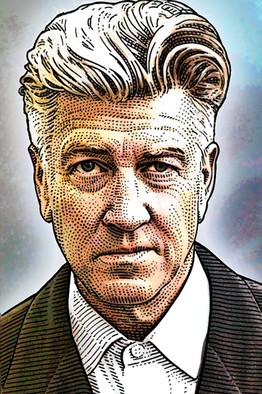
Clint Eastwood and David Lynch, along with a panel of researchers, veterans and active duty soldiers will launch “Operation Warrior Wellness”—a national initiative to teach 10,000 veterans and their families a simple meditation practice for preventing and treating post-traumatic stress disorder (PTSD). The live Webcast highlights a conference on the research and applications of Transcendental Meditation for PTSD at the Paley Center for Media in New York, Monday, December 13, at 11 am (ET). http://www.livestream.com/davidlynch.

The conference is being replayed at the same link. Also watch the live Change Begins Within Gala Event tonight from the Metropolitan Museum of Art at 9:00 pm ET.

David Lynch Says TM Will Cure Soldiers of PTSD – Tonic: The Anti-Gossip

December 6, 2010

David Lynch Says Transcendental Meditation Will Cure Soldiers of Post-Traumatic Stress

By Jo Piazza | Monday, December 6, 2010 9:36 AM ET

We made a valiant effort to chat with David Lynch about the amazing work his foundation is doing to spread Transcendental Meditation. And we only asked him about ‘Twin Peaks’ twice. We’re still fuzzy on who killed Laura Palmer.

On December 13, Hollywood director David Lynch will be joined by Clint Eastwood, Martin Scorsese, George Lucas and Dr. Mehmet Oz to launch the David Lynch Foundation’s Operation Warrior Wellness, a national initiative to help 10,000 veterans overcome post-traumatic stress disorder through Transcendental Meditation.

Suicide, divorce, domestic violence, crime and substance abuse rates among veterans at home are skyrocketing. With the support of Dr. Oz and Eastwood — both avid meditators — along with veterans from World War II, the Vietnam war, and the wars in Iraq and Afghanistan, the aim of Operation Warrior Wellness is to help soldiers use Transcendental Meditation to cope with PTSD and other effects of combat.

The David Lynch Foundation has been providing scholarships since 2005 for over 150,000 inner-city students, veterans, homeless adults and children, American Indians, and inmates and guards in maximum-security penitentiaries to learn TM over the past five years. Lynch himself has been meditating for more than three decades. We took some time with him last week to chat about how TM has changed his life and how he really, really, really believes it can change everybody else’s.

Tonic: What exactly will Transcendental Meditation do for returning vets suffering from PTSD?

David Lynch: From what I have heard, the veterans with PTSD are suffering big time. I have learned that 18 veterans commit suicide every day. One of the treatments is to show veterans programs of violence until they finally get numb to them. This to me is inhumane. You give them Transcendental Meditation and it is like giving them the key to the treasury within every human being. They sit comfortably. They chant their mantra and they dive within. With each meditation they get more of this consciousness and more peace. This is modern science’s unified field. It is a field so beautiful and positive that when you experience it in meditation you grow in all positive qualities. Tension, anxiety, sorrow, hate and anger all start to go away.

Tonic: How did you first get into Transcendental Meditation?

Lynch: I heard a phrase: true happiness is not out there; true happiness lies within. I felt a truth to that but the phrase doesn’t tell you where the within is.

I got interested in meditation because I thought that was a way of going in. Maharishi Mahesh has said most of the forms of meditation out there don’t deserve the name meditation. The Transcendental experience is one that utilizes the full brain. I looked into all kinds of meditation and one day my sister called and said she started Transcendental Meditation and I heard a change in her voice. I heard more happiness and I heard more self-assuredness and I said this is what I want. And I went out and got it. You’re an expert from your first meditation. My first meditation was so beautiful I have been doing it twice a day for 36 years.

Tonic: So can anyone learn it?

Lynch: If you’re human you can learn it. You need a legitimate teacher. But it is easy and effortless. It takes about four days to learn and then you have this technique. But if you are meditating correctly it will work.

Tonic: What is the cost for the average person to learn?

Lynch: Right now the cost is $1,500 but if it’s a hardship, because now we have the financial downturn, you can get it for $750. If you write to the Foundation chances are you can get it for $375.

Tonic: Has it helped your creative process?

Lynch: The field within the unified field is the ocean of pure consciousness. It is a field of infinite creativity. When you experience it you will grow in creativity. Life gets better. You get more creative and your IQ goes up. It’s a technique that opens the door to the deepest level within which is all positive.

Tonic: What are you working on besides your work with the Foundation?

Lynch: A bunch of music and paintings and trying to catch the next idea for a film and working on a documentary of Maharishi.

Tonic: Clint Eastwood, Martin Scorsese and George Lucas are all joining you in Operation Warrior Wellness. Do they meditate too?

Lynch: Clint and Martin do. I’m not sure if George does. Clint is really behind helping the veterans.

Tonic: Do you ever get sick of everyone asking you questions about Twin Peaks?

Lynch: [Laughs] Not at all. I love that people still love that world. I love that world too.

Photo courtesy of the David Lynch Foundation.

Chicago Tribune—The Iowa aura

December 3, 2010

The Iowa aura

In Fairfield, you can’t help picking up the maharishi vibes

By Josh Noel, Tribune Newspapers
5:48 PM CST, December 3, 2010
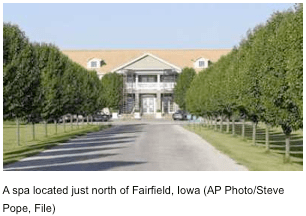
FAIRFIELD, Iowa — I spent two days in this little town hemmed in by farms and on both days became strangely sleepy about 3 p.m. Like, oppressively I-could-sleep-now-and-not-wake-up-until-the-morning sleepy. I attributed the weariness to the usual: not enough rest, early-morning runs, the oh-so-taxing life of a travel writer. Then I mentioned the phenomenon to a local. A knowing smile spread across her face.

“People say that all the time when they come here,” said Valerie Barnard, a slim 63-year-old who has lived in Fairfield for 14 years. “It’s just your metabolism lowering because of all the vibes.”

Yes, the vibes.

Fairfield, you see, is not just any friendly southeastern Iowa town of 9,200. It is a friendly southeastern Iowa town of 9,200 that is a big part of the transcendental meditative universe. Twice a day, hundreds or thousands of locals meditate at precisely the same time — many of them assembled in a pair of golden domes on the city’s north edge — with a belief that their communal effort can resolve crime, illness and international conflict. Therefore: the vibes.

How Fairfield, the site of Iowa’s first state fair, in 1854, came to be an unlikely meditative center dates to the late 1950s, when Maharishi Mahesh Yogi started the transcendental movement as a means to reach spiritual balance and peace. The phenomenon quickly went global, catching on with 1960s counterculture and, in 1973, birthing Maharishi International University in Santa Barbara, Calif. A year later, the school moved to Fairfield to take over the campus of the recently defunct Parsons College. MIU since has changed its name to the Maharishi University of Management.

Just another small Iowa town until then, Fairfield slowly morphed into a TM (as practitioners call it) destination. On its face, Fairfield still looks like any small Iowa town. The usual chain businesses sit on the town’s periphery, and at its heart a grassy square is ringed by Midwestern charm: the candy store, the barbershop, the pizza place.

But then you start to notice the wrinkles: the health store selling pills labeled “Stress Free Body” and “Stress Free Mind”; the plentiful ethnic and vegetarian restaurants; the organic-coffee shop; the larger-than-small-town-average health food store. And why do the people look so healthy and aglow?

That’s when it becomes clear that this is not just any Iowa town. Estimates say a quarter to a third of the population practices TM — including, these days, the mayor — and the experience is there to be had by visitors: private tours of TM hot spots, ayurvedic spa treatments and private lectures about the movement (where, if you ask enough questions, you’ll hear about the initiation fee; I was quoted $950). TM has come into vogue more than once, especially in the late 1960s, when the Beatles championed the movement. But never mind.

“Every time a story is written about us, you see the Beatles in it,” said Livia Cole, a 39-year-old TM practitioner who has lived in Fairfield for 13 years. “Who cares? We are so much more than that. Scientists do it, politicians, artists. It’s not a hippie thing.”

I met no better example than Art Frank, 64, a retired engineer who was one of Fairfield’s original TM settlers. We met at the Fairfield farmers market minutes after he had arrived in a shiny new BMW from his current home in Trenton, N.J. As we ate plates of freshly made Indian food, my surprise (which was unfair, I admit) must have been obvious: a meditator of more than 40 years drove here in a shiny new BMW?

“I’m an engineer, and I have a master’s degree from an Ivy League school,” Frank said. “I like my new car. I like to meditate, too.”

We discussed the calming benefits for a while — of meditation, not the car — then he suggested I wade in.

“You should try a shirodhara,” Frank said of a treatment that is essentially pouring a steady stream of oil on the forehead. “It helps balance the mind.”

Mind balance always sounds good, so I made a reservation at The Raj, the ayurvedic hotel and spa a few miles north of town that is known to host the occasional celebrity client.

The next morning, I met a man in his mid-20s named Jai at The Raj’s men’s treatment wing in what looked like a low-lit seventh-grade science classroom; small gas burners sat beside old pots and large silver bowls. The bandanna-wearing Jai led me to a dressing room and instructed me to strip to my underwear, wrap myself in a white sheet and affix blue hospital booties to my feet.

He returned a few minutes later to lead me to a room down the hall and described the experience ahead, which he promised would be “hypnotic”: For 30 minutes, he would gently stream warm olive oil back and forth across my forehead.

“You’ll follow it with your mind’s eye,” he said.

I climbed atop a 3-foot-high wooden table. Jai placed a warm towel over my eyes and, in a few minutes, began running the stream across my forehead, temple to temple. All I heard for the next half-hour was my breathing and the birds chirping softly outside. Life’s busy thoughts faded as the oil rhythmically fell, but I remained conscious enough to suspect the procedure would be closer to relaxing than day altering.

When Jai quietly announced he was finished and I tried to move, the shirodhara’s power became evident. My body had turned heavy and my jaw slack. Calm sat behind the eyes, and I struggled to lift myself. I couldn’t say if my mind was healed, but as usual, in Fairfield, I was ready to sleep.

jbnoel@tribune.com

If you go

Getting there

The closest major airports are in Des Moines and the Quad Cities, both of which are about 110 miles away.

Eating

Revelations (112 North Main St.; 641-472-6733; revelationscafe.com) is a go-to spot for meditators — or anyone who wants fresh, tasty food and three stories of books (including plenty of self-help titles). For a town of this size, downtown is teeming with quality, no-frills ethnic food, including Indian, Thai and Turkish. For finer dining, consider Top of the Rock (113 W. Broadway; 641-470-1515; topoftherockgrill.com) and Vivo (607 W. Broadway; 641-472-2766; vivofairfield.com).

Staying

There are a few B&Bs in town and the Fairfield Landmark Inn (115 N. Main St.; 641-472-4152; fairfieldlandmarkinn.com), which costs about $55 per night. The heart of the TM action, though, is The Raj (800-248-9050; theraj.com), a rather simple ayurvedic hotel, restaurant and spa that sits a few miles north of Fairfield in the TM-founded “town” of Maharishi Vedic City (though be warned: There’s nothing else to do there). At The Raj you can get just a room ($108 per night, plus tax) or intensive therapy for whatever ails you, from the half hour nervous-system- balancing shirodhara ($125 for 30 minutes) to a “rejuvenation package” ($660.80 per day, minimum three days). Also near Vedic City is the Rukmapura Park hotel (rukmapuraparkhotel.com).

To do

If interested in TM, visit the Maharishi University of Management (641-472-7000, mum.edu). A tour of Vedic City and local TM hot spots can be booked through the Raj.

More information

travelfairfieldiowa.com
; tm.org

Copyright © 2010, Chicago Tribune

Also see THE WEEK: Getting the flavor of Iowa’s aura.

Comments (3)

Add / View comments | Discussion FAQ

TravelFairfieldIowa at 9:06 AM December 6, 2010
There’s something about a place where the arts and cornfields merge. Fairfield is Iowa’s t art colony with energetic and diverse performing arts and events, including the award winning 1st Fridays Art Walk, all within reach of the cultural district and internationally-inspired restaurants. This Iowa Great Place features professional musical theater, dance and eclectic music at the Sondheim Center, examples of sustainable living, recreational trail system and over 40 internationally inspired restaurants. Find the perfect getaway in Fairfield!
TMChicago at 9:31 AM December 4, 2010
For peace of mind and relief from stress as well as development of enlightenment, my husband and I practice and teach Transcendental Meditation in Chicago.  When we need deep restorative rest, we travel to Fairfield, Iowa.  We often stay at the Mainstay Inn next to the new Sondheim Civic Center and we swim in an olympic pool that uses almost no chemicals. Fairfield is a true haven. We often enjoy a richer cultural cornacopia more affordably, while restoring our health in the bargain.
Peter Panne at 7:36 PM December 3, 2010
I’m semi retired and in my lifetime I have traveled and lived in many small cities and towns in upstate New York, Colorado, Florida and Texas and there is no place that tops Fairfield Iowa. It’s relaxing and stimulating at the same time. I get plenty of rest and there is also plenty to do. It’s a down home, friendly, quiet little town with wonderful restaurants, art galleries, bookstores, music venues, theaters and the best people you’d ever wanna meet. I just love it!

Veterans Today: Filmmaker David Lynch Introduces Veterans to Meditation

November 26, 2010

Filmmaker David Lynch Introduces Veterans to Meditation

November 26, 2010 posted by Chaplain Kathie

When you tell a Marine they need to do yoga or meditate, they think you’re the one with the problem. Yet when they understand they had to train their mind and body to respond to combat situations, they must now train their mind and body to relax again, they get it. Stress and anxiety is a big part of PTSD. Learning how to relax plays a big role in healing. They need to take care of their minds, bodies and spirit. Each one connected to the other just as each part of them was exposed to the traumas of combat, all of the person needs to be taken care of.


Filmmaker David Lynch Introduces Veterans to Meditation
David Lynch is looking to make the world a little quieter.

The filmmaker behind the movies “Blue Velvet” and “Mulholland Drive” is giving $100,000 to launch Operations Warrior Wellness, an initiative to help 10,000 veterans overcome Post-Traumatic Stress Disorder and other war-related illnesses through transcendental meditation, which he says creates “professional peacemakers.”

Backed by the likes of actors Clint Eastwood, directors George Lucas and Martin Scorsese, Mr. Lynch will announce the new program next month at a gala at the Metropolitan Museum of Art.

In 2005, Mr. Lynch started the David Lynch Foundation for Consciousness-Based Education and Peace and since then has donated half a million dollars to help finance scholarships for 150,000 students who are interested in learning transcendental meditation. The foundation has also funded research at institutions such as the University of Connecticut and the University of Michigan on the health benefits of the meditation technique.
read more here Filmmaker Introduces Veterans to Meditation

The human body is born with the ability to respond to the world they live in. The warrior has been taught since the beginning of time to push on past fear, climate conditions, hunger, thirst and lack of rest. They must then train their body to be able to relax just as they must work to recover the human beneath the warrior.

Filmmaker David Lynch Introduces Veterans to Meditation

November 26, 2010

The Wall Street Journal Greater New York
Filmmaker Introduces Veterans to Meditation

David Lynch is looking to make the world a little quieter.

The filmmaker behind the movies “Blue Velvet” and “Mulholland Drive” is giving $100,000 to launch Operations Warrior Wellness, an initiative to help 10,000 veterans overcome Post-Traumatic Stress Disorder and other war-related illnesses through transcendental meditation, which he says creates “professional peacemakers.”

DONOR

Backed by the likes of actors Clint Eastwood, directors George Lucas and Martin Scorsese, Mr. Lynch will announce the new program next month at a gala at the Metropolitan Museum of Art.

In 2005, Mr. Lynch started the David Lynch Foundation for Consciousness-Based Education and World Peace and since then has donated half a million dollars to help finance scholarships for 150,000 students who are interested in learning transcendental meditation. The foundation has also funded research at institutions such as the University of Connecticut and the University of Michigan on the health benefits of the meditation technique.

Called “Quiet Time in Schools,” students and teachers meditate for 10 minutes at the beginning and end of each day. The funds pay to train educators and parents on how to administer and teach the method.

“Soon grades and attendance go up 20% to 30% and suspensions and expulsions go down,” Mr. Lynch says. “Instead of giving the kids drugs like Ritalin that just numb them, we give them a technique to reduce stress and focus better.”

Mr. Lynch, who is 64 years old, began meditating about 40 years ago using this method, which was introduced to the West nearly half a century ago by Indian guru Maharishi Mahesh Yogi. The technique is typically practiced twice a day for 20 minutes and used to eliminate stress, promote good health and gain deep relaxation.

Adapting the technique for college campuses, elementary schools, after-school clubs and hospital-wellness programs, Mr. Lynch says he has been able to improve academic performance and creativity in students. It has also been taught to men and women in homeless shelters and in prisons.

Now, Mr. Lynch wants to bring this approach to help the thousands of war veterans returning from Iraq and Afghanistan.

“These men and women have a lot of honor for what they have been through and don’t want to appear weak or admit suffering,” he says, pointing to high suicide rates and incidence of PTSD among veterans.

To that end, he says he wants to work through veteran associations and support groups to bring them this meditation technique.

“Clint Eastwood is about as macho as they get and he’s been meditating longer than I have,” he says. “We’re behind this technique and we think it can help veterans reclaim their lives and save themselves, their families and their friendships.”

Jeanne Ball: Could Meditation Have Something to Do with Plummeting Crime Rates? Huffington Post

November 26, 2010

Jeanne Ball: Could Meditation Have Something to Do with Plummeting Crime Rates? Huffington Post

The Iowa Source: MUM Sustainable Living Center

November 21, 2010

The Iowa Source cover story on MUM’s SLC written by Linda Egenes

Building the Future: MUM’s Sustainable Living Center
New Zero-carbon Classroom Showcases Green Living
http://www.iowasource.com/fairfield/2010_11_slc.html

Sustainable Living Center: It Takes a Team to Go Green
http://www.iowasource.com/fairfield/2010_11_slc_team.html

For more information and videos of the phases of construction plus a TV news report visit Sustainable Living Center. Also see YouTube videos at mumslc from Earth Day 2010, a Sustainable Living Center Tour Dec 2010, and Building Progress Reports 1, 2, 3, & 4. To find out more about a degree program in Sustainable Living, visit: http://sustainableliving.mum.edu.

BUILDINGS Magazine Sept/Oct 2011: A Zero Utility Bill Building

The Flow of Consciousness: Maharishi Mahesh Yogi on Literature and Language

November 3, 2010

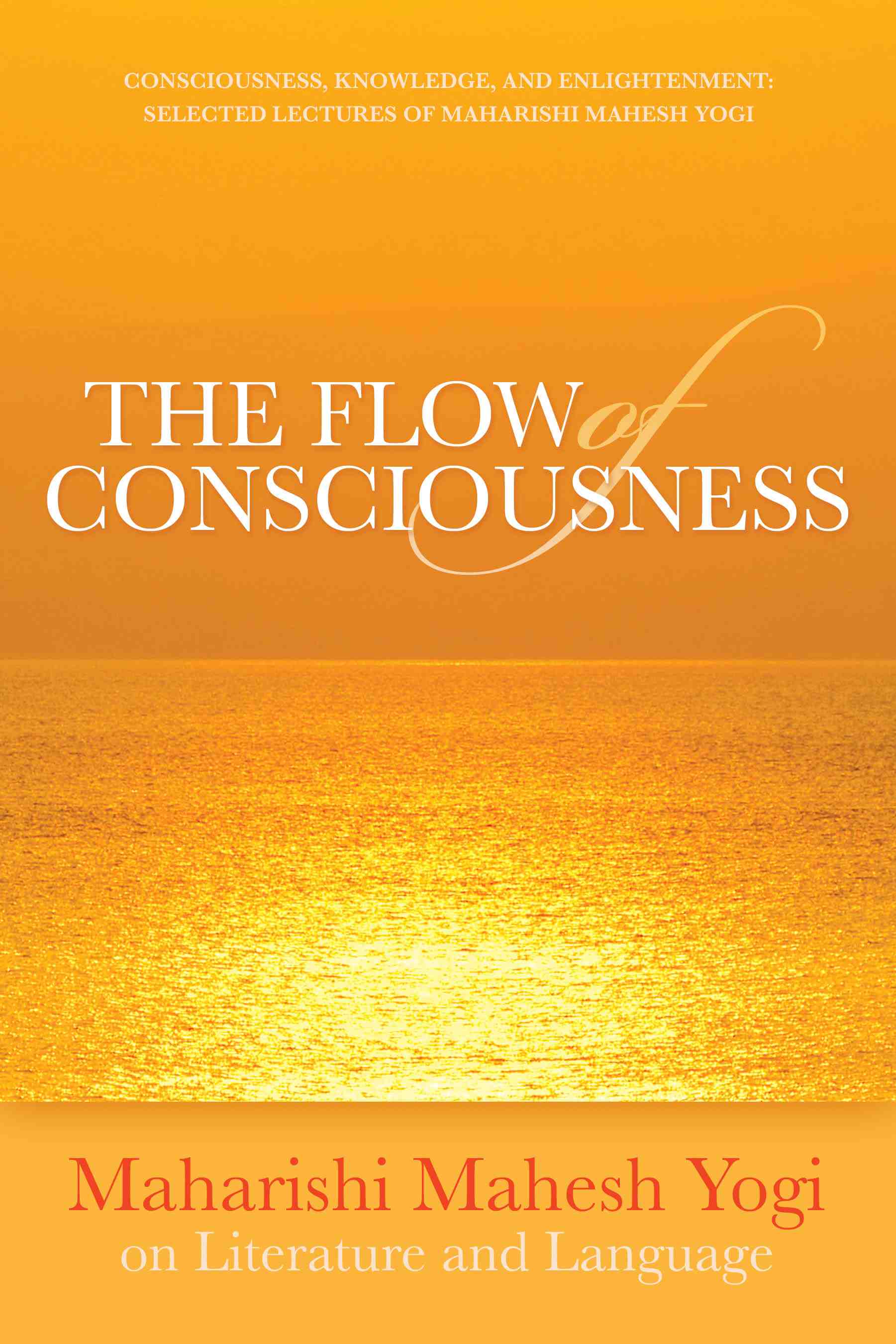
THE FLOW OF CONSCIOUSNESS: Maharishi Mahesh Yogi on Literature and Language, 1971 to 1976, edited by Rhoda F. Orme-Johnson, Ph.D. and Susan K. Anderson, Ph.D.

For the first time, a selection of talks by Maharishi Mahesh Yogi, the founder of Maharishi University of Management, has been transcribed and published, with this volume on literature and language projected to be the first in a series publishing talks in many different disciplines. In response to MUM faculty talks on art, literature, government, education, and many other disciplines, Maharishi would give his profound insights into that discipline, a direction for research scholars, and a vision of how the study of consciousness would enrich and develop each area of academic inquiry and personal experience. A number of the talks were in response to presentations given at international symposia by leading scholars in their field, Nobel laureates, and such eminent professionals as R. Buckminster Fuller.

Over the years, Maharishi Mahesh Yogi recorded brilliant and inspiring lectures on the literary process, as well as critical theory and technique, emphasizing the relevance of the state of consciousness of both writer and reader. He explained how only from an expanded basis can the writer spontaneously experience and express refined emotions and ideas and only from such a basis can the reader hope to understand and enjoy such writings. Literature itself can be a means to evolve one’s consciousness through sounds, rhythms, and meanings, swinging the reader’s attention from concrete to abstract, purifying consciousness and producing bliss. A fully developed consciousness can express the ocean in a drop, and from that drop flows a river of meaning, power, and enjoyment.

Immersing oneself in the transcripts of Maharishi’s lectures allows readers to feel his presence, to hear his voice, his rhythms of speech, his humor, and to appreciate his skill as a teacher. His exposition of the power of poetry, particularly the poetry of the Veda, gives the reader a taste of his intellect and his profound understanding of language and literature. It is a journey through a great mind and an exploration of a topic familiar and beloved by all.

This volume is a valuable resource to teachers, students, and all readers of literature, to all those interested in higher human development and the literary process.

The 350-page book includes 14 talks given in the years 1971–76 and is available at Maharishi International  University Press.

The Review wrote an informative article, the first of six, in issue Vol. 26, #4, November 3, 2010, announcing the publication: First-Ever Book of Maharishi’s Lectures Explores Literature and Language.

MIU Press later offered The Flow of Consciousness with The Unmanifest Canvas as a discounted Art Book Combo.

Dean of Faculty Cathy Gorini spoke with Dr. Rhoda Orme-Johnson, the first interview in a new series on KHOE titled, “A Chat With The Dean.” This discussion focused on Dr. Orme-Johnson’s new book, “The Flow Of Consciousness,” transcripts of Maharishi Mahesh Yogi’s lectures. Drs. Gorini and Orme-Johnson settle into a warm discourse on the significance of Maharishi’s lectures, in particular, the field of literature. Recorded Oct 26, 2010. (mp3 47 mins, 16 MB)

Read the rest of this entry »

The Iowan features Fairfield artist Stacey Hurlin’s photos of light and love in The Halo Project

October 28, 2010

A Fairfield artist focuses on unifying humanity

Click on The Halo Project: The Hopeful Lightness of Being, to see all of the photographs taken by Stacey Hurlin featured in the November/December 2010 issue of The Iowan.

Stacey Hurlin’s 2009 art installation — Angels on High — included several circular light fixtures. When the setup was complete, one extra light fixture remained. Voila! The Halo Project was born. Hurlin invited visitors to her Fairfield gallery to pose for the camera in an aura of light.

“I did not expect what happened next. People became playful. Bonds were formed — among family members, between friends, or between the sole subject interacting with the photographer,” remembers Hurlin.

After shooting a thousand photographs, Hurlin began to see something new as she peered through the lens. As people unassumingly held a circle of light as a prop, she noticed that their faces were themselves holding light for just that instant.

Hurlin says the photography project has revealed and been propelled by the strength of human commonality. Her images, she explains, accentuate our unity. “No medium compares with photography to tell the truth. You can show an image of hate and suffering, and the viewer can make a whole story around that photo, that suffering is a truth about humanity. Exhibit a photo of light and love, and that too will mirror for us a truth, our highest goodness, our true nature as a human race, peace.”

She is currently photographing in Iowa, but Hurlin plans to expand the scope of the project, sometimes using a portable “Halo Booth.”  She’s researching options for a solar panel that would enable her to photograph in remote locations sans electricity.

Hurlin envisions a wide application for The Halo Project images, perhaps one day seen along roadways and on the information superhighway. “Wherever these photo collages are exhibited — be it billboards, magazines, airports, or city halls — I want the viewer to take pause and to somewhere inside have a voice say, ‘Yes, there is light and, yes, I could be one of those people, and, yes, let it begin with me.’ It is a tiny awakening, but it is huge.” — B.W. [Beth Wilson, Editor]

Anastasia “Stacey” Hurlin retains the rights to The Halo Project concept, including the use of lights as a backdrop for individual and group photos that are then collaged in large groupings, the working title The Halo Project, and the application of “halos” as part of a local, national, or international image project.

After raising five sons, Stacey Hurlin and her  husband now live in a solar- and wind-powered Fairfield home. Hurlin, who signs her artwork simply “Anastasia,”  is both painter — with women as her primary subject — and photographer. She approaches any photography project — local or global — as an endeavor that mirrors the light and energy of life’s force itself. Nothing more, nothing less. (anastasiafineart.com)

READ MORE IN THIS ISSUE OF THE IOWAN   subscribe now

ORDER PAST ISSUES OR BULK QUANTITIES OF THE IOWAN 800-352-8039

BECOME A FAN OF THE IOWAN

Jerry Yellin: Healing the Hidden Wounds of War

October 27, 2010

On Patrol | Until every one comes home | The Magazine of the US

October 27, 2010

Healing the Hidden Wounds of War

by

I was one of the 16 million people who served our country in World War II.

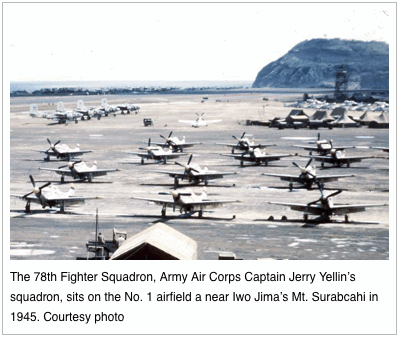
Just 18 when I enlisted, I was 19 when I graduated from flight school at Luke Field in Phoenix, Arizona, and three weeks into my 21st year when I landed on Iwo Jima. I quickly became familiar with death.

On March 7, 1945, our squadron landed on a dirt runway at the foot of Iwo Jima’s Mount Suribachi. I looked out at the landscape as I taxied my P-51 Mustang to our parking area and saw huge piles of dead Japanese soldiers being pushed into mass graves, the sight and smell indelibly imprinted on my mind. It was a shocking sight for such a young man to see.

Our squadron area was next to a Marine mortuary where hundreds of dead Marines were being readied for burial.

The fighting was fierce on the eight-square-mile island situated 650 miles off Japan’s southern coast. Nearly 7,000 Marines and 21,000 Japanese soldiers lost their lives there.

I flew 19 long-range missions over Japan from Iwo Jima with 11 young pilots; all of them friends, who did not return home. Over the course of the war, I flew with 16 pilots who did not come back.

On one mission, Al Sherren, my classmate from flying school called in, “I’m hit and can’t see,” and he was gone. Robert “Pudgy” Carr also disappeared that day. He was my tent-mate.

Three of those killed were my wingmen. Danny Mathis was lost in a mid-air collision along with 26 other fighters the day my wisdom teeth were pulled and I was grounded. Dick Schroeppel died following me on a strafing run over Chichi Jima, and Phil Schlamberg disappeared from my wing in the clouds on August 14, 1945 – the day the war ended.

All of us knew who we were fighting and why.

Then it was over. One day a fighter pilot, the next a civilian.

No buddies, no airplane, nothing to hold on to, and no one to talk to. Life, as it was for me from 1945 to 1975 was empty.

The highs I had experienced in combat became the lows of daily living. I had absolutely no connection to my parents, my sister, my relatives, or my friends. I listened to some of the guys I knew talk about their experiences in combat and I knew they had never been in a battle let alone a war zone. No one that I knew who had seen their friends die could talk about it. The Army Air Corps had trained me and prepared me to fly combat missions, but there was no training on how to fit into society when the war was over and I stopped flying.

I was not able to find any contentment, any reason to succeed, any connection to anyone that had meaning or value. I was depressed, unhappy, and lonely even though I was surrounded by a loving wife and four sons. That feeling of disconnect, lack of emotions, restlessness, empty feeling of hopelessness lasted until 1975.

In 1975, I learned a technique called Transcendental Meditation (TM). In just a few months life became meaningful to me and now, at 86 years of living, I can say that this meditation has brought me peace and contentment.

War is always difficult for those on the front lines, but today’s wars are being fought in the countries of our enemies, on their territory, their homeland, and their cities, with no distinguishing uniform. There are no established front lines or objectives to capture. Every citizen can be looked at as “the enemy,” every road dangerous to travel and every pile of garbage might explode from a hidden IED.

As I write this today, in October 2010, there have been 5,745 of our servicemen and women killed and 86,175 evacuated because of wounds or illness. That’s 21.7 percent of the approximately two million who have seen combat duty.

It has been estimated by some private organizations that up to 25% of those who have served since 2001 may seek treatment for post traumatic stress.

I am a recovered PTSD veteran. Meditation made a difference in my life. Maybe it can work for others as well.

To learn more about Operation Warrior Wellness, please visit www.davidlynchfoundation.org.

This is an excerpt from Jerry Yellin’s book The Resilient Warrior.

Army Air Corps Captain Jerry Yellin (Ret.) flew P-51 Mustangs during World War II. He currently co-chairs Operation Warrior Wellness and is the award-winning author of four books, including Of War and Weddings.

Copyright ©2010 USO. All Rights Reserved

Read the rest of this entry »